Soccer scholarships in the USA
A soccer scholarship pays for your bachelor's degree at a US university or college. There are more than 3,000 soccer teams at US universities and colleges. Soccer has no ranking that shows a coach your level. So coaches look at your club's league, your minutes and your video. These three things decide whether you get an offer.
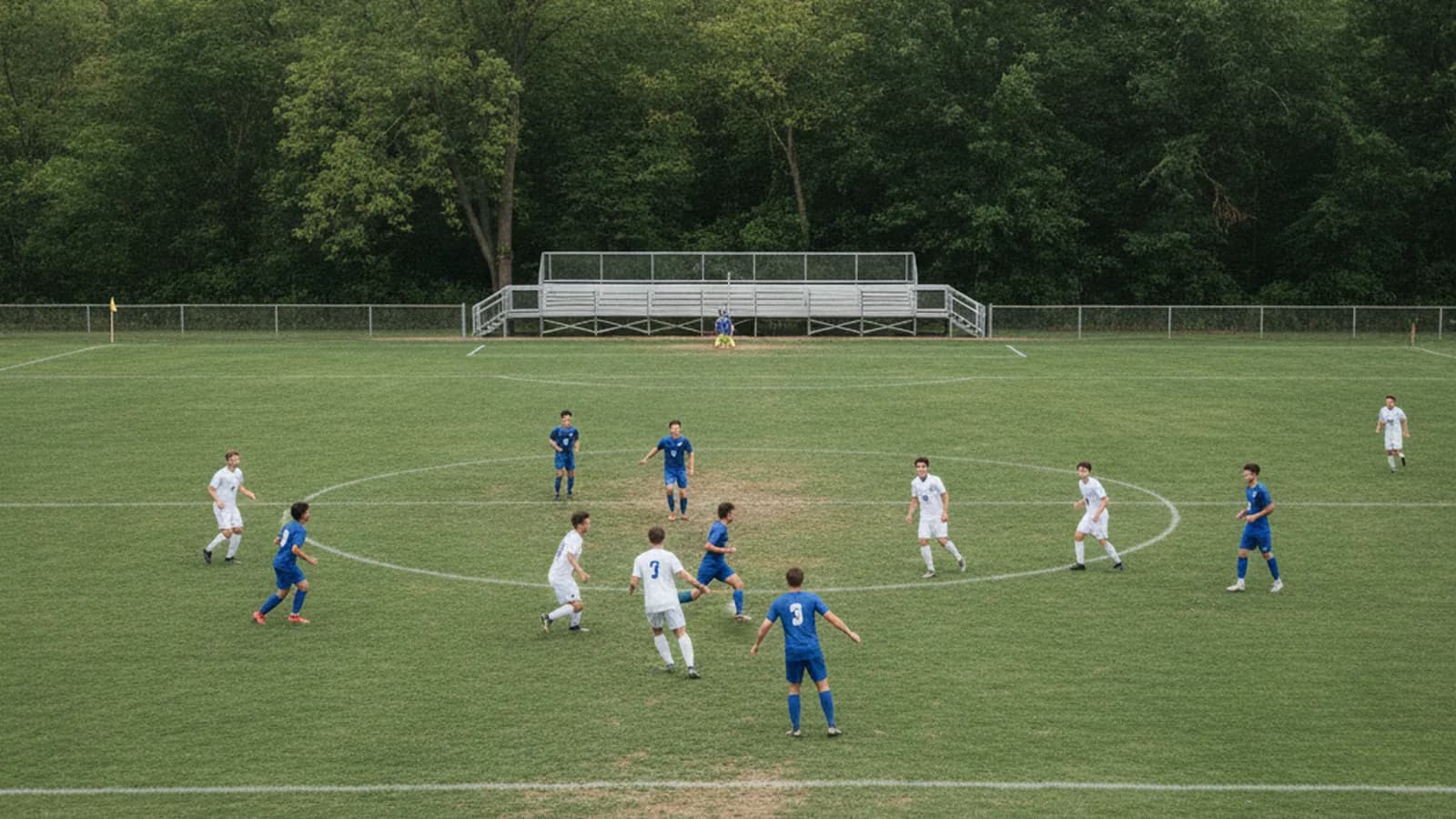
Image: AI-generated.
6 reasons for a soccer scholarship in the USA
College soccer has more than 3,000 teams
US universities and colleges have 1,395 soccer teams that may give athletic scholarships. These teams play in NCAA Division I or II or in the NAIA. The NCAA is the largest college sports association, and the NAIA is smaller.
Coaches judge you by video and league
Soccer has no ranking that shows your level. Coaches see your level in your video and your league details. Clear and honest details can win you a spot over a more talented player.
Time to improve after the fall season
The college soccer season runs from August to November. In spring, your team trains with its coaches and plays only exhibition games. That gives you time to work on your game.
Everyday English in training and class
Training, video analysis, team meetings and your classes are all in English. You speak English every day for the four years of your bachelor's degree.
Friends from a team that travels together
Your team travels to away games by bus or plane. You eat together on the road. Many players stay friends with their teammates long after they graduate.
Time management, because you plan your own week
During the season, you fit games, travel and classes into the same week. Nobody plans it for you, so you learn to manage your own time.
Soccer has no world ranking that a college coach can look up. Coaches judge you by your video, your league and your minutes.
Soccer teams and roster places by division
A team belongs to one university or college, one sport and one gender. A university or college with men's and women's soccer has two teams. We divide the roster places by the number of teams. The result is the size of a typical team in this sport.
Men
- D I31.8 Average squad size206
- D II38.3 Average squad size206
- NAIA40.7 Average squad size191
Teams, 2024-25
Women
- D I31.7 Average squad size342
- D II32.3 Average squad size256
- NAIA29.8 Average squad size194
Teams, 2024-25
| Division | Men, Teams | Women, Teams | Men, Average squad size | Women, Average squad size |
|---|---|---|---|---|
| NCAA Division I | 206 | 342 | 31.8 | 31.7 |
| NCAA Division II | 206 | 256 | 38.3 | 32.3 |
| NAIA | 191 | 194 | 40.7 | 29.8 |
What each column measures
- Division:
- Division names the association and the level of a university or college. The two NCAA levels D I and D II may give athletic scholarships. D III may not. The NAIA is a smaller second association, and it gives them too.
- Teams:
- A team belongs to one university or college, one sport and one gender. A university or college with men's and women's soccer has two teams.
- Average squad size:
- We divide the roster places by the number of teams. The result is the size of a typical team in this sport.
Roster limit, first contact and season for Soccer scholarships
Men
- Maximum squad size
- 28
- Scholarship limit before July 2025
- 9.9
- Teams
- 1,428
- First coach contact, school leavers of 2028
- 15 June 2026
Women
- Maximum squad size
- 28
- Scholarship limit before July 2025
- 14.0
- Teams
- 1,595
- First coach contact, school leavers of 2028
- 15 June 2026
- Competition season
- Fall season
- Ranking coaches use
- no figure reported
What each column measures
- Maximum squad size:
- The roster limit is the most athletes a team may have in this sport. Division I, the top NCAA level, has applied it since July 2025.
- Scholarship limit before July 2025:
- This was the scholarship limit per Division I team in this sport. It applied until July 2025. Since then, the limit counts athletes instead.
- Teams:
- A team belongs to one university or college, one sport and one gender. A university or college with men's and women's soccer has two teams.
- First coach contact, school leavers of 2028:
- A college coach may write to you or answer you from this date on. It applies if you finish school in 2028. You may write to coaches before that date.
- Competition season:
- These are the months in which this sport holds its competitions in the USA. The fall season starts in August. The spring season ends in May.
- Ranking coaches use:
- Coaches in this sport use this public ranking or measured result. They compare your level with their current team.
Soccer scholarships per team in NCAA Division I
A Division I soccer team may give every player a scholarship. Division I is the top level of the NCAA. Its university or college must have joined the House settlement. The team may then have up to 28 women or 28 men. This court settlement has limited players per team since 1 July 2025. The old rules limited the number of scholarships instead.
- Maximum roster size, women, Division I
- 28
- Maximum roster size, men, Division I
- 28
Old scholarship limits outside the settlement
The House settlement is a court settlement from 6 June 2025. Some Division I universities and colleges stayed out of it. They still follow the scholarship limits from before 1 July 2025. The old limits allow 9.9 full scholarships per men's soccer team. Women's soccer teams may give 14 full scholarships. Coaches split them into partial scholarships.
Fewer places on large teams
Many Division I soccer teams had 30 or more players before 1 July 2025. House settlement teams now keep up to 28 women or 28 men. So fewer players get a spot on a team.
Division II and NAIA limit the money
The NAIA is a separate association of smaller universities and colleges. Division II and the NAIA limit the total scholarship money per soccer team. Most coaches there split the money into partial scholarships for several players.
Required level for a soccer scholarship
To win a soccer scholarship, you must be good enough for an open position. In total, 1,395 college soccer teams may give athletic scholarships. Soccer has no ranking, so coaches check your club's league first. Then they check your minutes there, and then your video.
- Women's and men's teams, Division I
- 548
- Women's and men's teams, Division II
- 462
- Women's and men's teams, NAIA
- 385
Regular minutes count more than a big club
Coaches find it easier to judge a regular starter in a strong regional league. A substitute at a bigger club is harder to judge. The substitute plays fewer minutes for a coach to watch.
Name your league, its level and your minutes
Write down your league's name, its country and its level in that country. Then a US coach can look it up. Add your team's place in the standings and your league minutes this season.
Youth national team at the top
Some players play for their country's youth national team. If you do, say so at the start of your email to a coach.
Coaches recruit for open positions
Coaches look for goalkeepers and center backs in different years than for wingers. A Division I men's team may have only 28 players. So a coach recruits for the positions that are open.
Most teams play outside Division I
The NAIA is a separate association of smaller universities and colleges. Division II and the NAIA have more soccer teams than Division I. Their coaches often recruit later. They also take players who are not yet ready for a full scholarship.
Roster places in women's and men's college soccer
In 2024-25, women's college soccer had 792 teams. These teams had 24,866 roster places. Men's college soccer had 603 teams with 22,211 roster places. A roster place is one player's spot on a team for one season. The counts cover NCAA Division I and II and the NAIA. Universities and colleges in these groups may give athletic scholarships.
- Women's teams in Division I
- 342
- Men's teams in Division I
- 206
Roster places in Division I
Division I soccer teams have 10,827 roster places for women. Men's teams in Division I have 6,551 roster places.
Roster places in Division II
Division II soccer teams have 8,261 roster places for women. Men's teams in Division II have 7,893 roster places.
Roster places in the NAIA
The NAIA is a separate association of smaller universities and colleges. Its women's soccer teams have 5,778 roster places. NAIA men's soccer teams have 7,767 roster places.
Fewer men's teams in Division I
Division I has 206 men's soccer teams and 342 women's soccer teams. That is fewer men's teams than women's teams. Men from abroad should write to Division II and NAIA coaches from the start.
Average roster size by division
In 2024-25, an average Division I women's soccer team had 32 players. An average Division I men's team had 32 players. An average Division II men's team had 38 players. An average NAIA men's team had 41 players.
Share of college soccer players from abroad
In Divisions I and II, 19.6 percent of soccer players come from abroad. These are the two NCAA levels that give athletic scholarships. The NCAA register of home countries lists 27,630 soccer players in total. Of these players, 5,423 come from 142 other countries. The register does not cover the NAIA or Division III.
- Men from abroad, Division I
- 39%
- Women from abroad, Division I
- 12%
- From Europe, of all players from abroad
- 58%
Players from abroad in Division II
In Division II, 32 percent of men's soccer players come from abroad. Among women's soccer players, the share is 8 percent.
Europe, Latin America and Canada
Of the soccer players from abroad, 58 percent come from Europe. Another 15 percent come from Latin America, and 13 percent from Canada.
Asia and the other regions
Of the soccer players from abroad, 4 percent come from Asia. Players from Africa, Oceania and all other regions make up 9 percent together.
Source: NCAA register of home countries, Division I and II. The Athletes Personal Dashboard for soccer lists every country with its number of players.
Nursing and teaching degrees alongside college soccer
You can combine a bachelor's degree in nursing or teaching with college soccer. Both degrees have required placements in a hospital or a school. These placements can clash with the soccer season from August to November. Ask your department early if it can move your placement to spring. In spring, your team only trains and plays exhibition games.
- Degree completed before year 3, Division I
- 40%
- Degree completed before year 4, Division I
- 60%
- Degree completed before year 5, Division I
- 80%
Fixed hours in nursing and teaching
Nursing students work supervised hospital shifts called clinical placements. Teaching students finish their degree with student teaching. That means full school days in a classroom.
Montana Tech plans placements around games
At Montana Tech, the nursing department plans schedules with the coaches ahead of time. It puts athletes in hospital shifts and labs on days without travel.
Olivet Nazarene athletes train around school days
Olivet Nazarene University has athletes who study teaching. They train before or after their school day in the classroom.
Book classes before other students
With priority registration, athletes choose their classes before other students. Then they can plan their classes around training. Virginia Commonwealth University gives priority registration to all its athletes. The University of Maryland engineering school gives it to every athlete it teaches.
An academic adviser checks your progress
At the University of Denver, an academic adviser for athletes checks your degree progress. The adviser also checks that you stay eligible to play. Your adviser helps you choose courses that fit training and games.
Choose your degree before your second year
Division I is the top level of the NCAA. It sets a required pace for your bachelor's degree. Only courses that belong to your degree count toward this pace. A late switch to nursing or teaching can put your progress at risk.
Route to professional soccer after college
Men's college players reach Major League Soccer, or MLS, through the SuperDraft. MLS is the top men's league in the USA and Canada. In the draft, MLS clubs take turns picking players. Women's college players sign with NWSL clubs without a draft. The NWSL, the top US women's league, ended its draft in 2024.
- MLS clubs in 2026
- 30
- International roster slots, MLS 2026
- 241
- Rounds in the 2026 SuperDraft
- 3
SuperDraft from the second year of study
The 2026 SuperDraft took place on December 18, 2025. MLS clubs could pick college players from their second year of study on. Clubs could also pick players from Generation adidas. This is a program of MLS and adidas for exceptional young talent.
Open to Division II and III players
The MLS rules name no division. So the SuperDraft is open to college players from Division I, II and III. Clubs may pick only players that MLS has put on its draft list.
Homegrown players need an academy year
An MLS club may sign players from its own youth academy without a draft. MLS calls this player a Homegrown Player. The player needs at least one year in that academy. Few players from outside the USA and Canada have such an academy year.
International roster slots in MLS
MLS has 30 clubs in 2026. Together, they share 241 international roster slots. Ask an MLS club early whether you would use one of its international slots.
FIFA's definition of a professional
FIFA is the world soccer association. It counts you as a professional once you have a written contract. You must also earn more than your expenses. A move to a club in Europe follows the FIFA transfer rules.
Training compensation up to age 23
Your first professional club owes your former youth clubs a payment. FIFA calls this payment training compensation. FIFA requires it until the end of the year you turn 23. The rule does not apply in women's soccer.
Sources: 2026 MLS SuperDraft rules, MLS roster rules and FIFA transfer rules, January 2025 edition. NWSL collective agreement of August 22, 2024.
Home games under the lights on campus
Most college soccer teams play home games on Friday or Sunday evenings. They play under the lights on a field on campus.
At large universities and colleges, a band plays and a few thousand fans watch. A small university or college draws about two hundred fans. Many of these fans know the players on the team.
Your university or college plays in a conference, a regional league of college sport. Conference away games often mean several hours on a bus, or a flight.
Your university or college books the team hotel and the meals. It also sets up a visit to the field before the game.


Soccer on US television and streaming
- College conferences are the regional leagues of college sport. Their streaming services show most league games. Your family can watch your games online from Europe.
- National TV channels show the NCAA tournament at the end of the season. Scouts from professional clubs watch these games.
Highest-aid universities and colleges per roster place
Universities and colleges report their athletic aid for men and for women. They do not report it for each sport. So the amount per roster place covers the whole sports department.
| University or college | Division | State | Fees waived per roster place |
|---|---|---|---|
| Southern Methodist University | D I | TX | US$56,388 |
| Northwestern University | D I | IL | US$53,919 |
| University of Denver | D I | CO | US$42,890 |
| Vanderbilt University | D I | TN | US$42,235 |
| Stanford University | D I | CA | US$42,012 |
| Rice University | D I | TX | US$41,166 |
| Loyola Marymount University | D I | CA | US$40,056 |
| University of Southern California | D I | CA | US$40,006 |
| Wake Forest University | D I | NC | US$38,933 |
| University of Miami | D I | FL | US$38,474 |
What each column measures
- Division:
- Division names the association and the level of a university or college. The two NCAA levels D I and D II may give athletic scholarships. D III may not. The NAIA is a smaller second association, and it gives them too.
- Fees waived per roster place:
- We divide the total fees waived by the roster places in the same report. A single scholarship can be much higher or much lower than this average.
Common questions about Soccer scholarships in the USA
How do I get a soccer scholarship in the USA as an international player?
How many soccer scholarships exist in the USA?
How much does studying in the USA on a soccer scholarship cost?
Is Division II or NAIA soccer a step down from Division I?
What percentage of Division I soccer players go pro?
Is a video enough for a soccer scholarship, or do I need a camp?
Can I get a soccer scholarship after semi-professional play?
Am I too old for a soccer scholarship at 20?
Rules for your athletic scholarship in the USA
Sources
Each figure comes from one of these sources. If no source reports a figure, we do not estimate one.
- U.S. Department of Education, Equity in Athletics Data Analysis (EADA) (22 August 2026)
- NCAA, DI Board of Directors formally adopts changes to roster limits (20 August 2026)
- NCAA, Question and Answer: Implementation of the House Settlement (updated 29 May 2026) (6 November 2026)
- NCAA, 2026-27 Division I Manual, Bylaw 17.2 (roster limits) (6 November 2026)
- College Sports Commission, Participating Schools (6 November 2026)
- NCAA Research, Country of Origin Spreadsheet for Student-Athletes, season 2021-22 (31 August 2026)
- NCAA, Division I Academics (progress toward degree) (11 November 2026)
- Virginia Commonwealth University, Student-Athlete Academic Services (11 November 2026)
- University of Maryland, A. James Clark School of Engineering, Engineering Student Athletes (11 November 2026)
- University of Denver, Student-Athlete Academic Services, Athletics Advising (11 November 2026)
- Montana Tech, Montana Tech students shatter myth that student-athletes can't major in nursing (2025) (11 November 2026)
- Marquette University, How do student-athletes balance nursing and sports? (26 March 2025) (11 November 2026)
- Olivet Nazarene University, Balanced performance: student teaching as a collegiate competitor (11 April 2025) (11 November 2026)
- MLS, 2026 MLS SuperDraft Rules and Regulations (11 November 2026)
- MLS, Roster Rules and Regulations (as of 3 February 2026) (11 November 2026)
- NWSL, NWSL and NWSLPA Agree to Historic Collective Bargaining Agreement (22 August 2024) (11 November 2026)
- NCAA, Probability of Competing Beyond High School (11 November 2026)
- FIFA, Regulations on the Status and Transfer of Players, January 2025 edition, Articles 2 and 20 (11 November 2026)
The editorial team of Athletic Scholarships USA writes and checks every text and figure. We are not an agency and do not place athletes at universities and colleges. When an agency would serve you better, we say so.