Midwest
Athletic scholarships in Minnesota
Ice hockey shapes college sport in Minnesota. Its winters are among the coldest in the lower 48 states. Several public universities and colleges charge students from other states no surcharge.
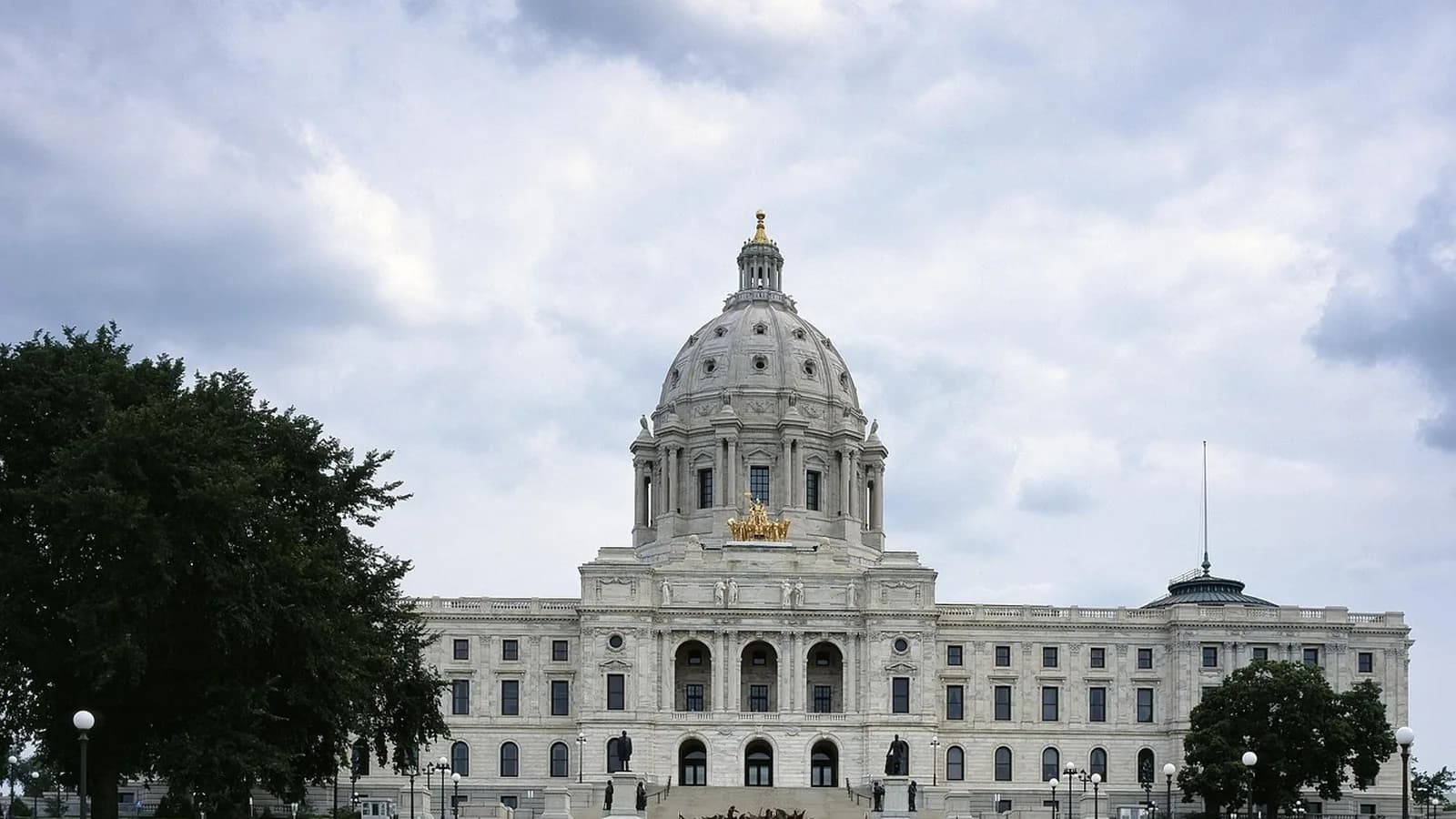
Photo: 12019, via Pixabay
Minnesota, the Twin Cities and the northern forests
People call Minneapolis and Saint Paul the Twin Cities. They form Minnesota's only large metro area.
Most of Minnesota's people live in the Twin Cities. Lakes and forest stretch for hundreds of kilometers north of the Twin Cities.
Minneapolis-Saint Paul International Airport has direct flights from several European cities. So you can often reach Minnesota without changing planes.
January in Minnesota is very cold. In downtown Minneapolis and Saint Paul, enclosed skyways connect many buildings. People can cross the city center without going outside.
Twin Cities and regional university towns in Minnesota
Minnesota's two Division I universities are in the Twin Cities. Division I is the top level of the NCAA. Its Division II universities and colleges are in smaller towns across the state.
- Minneapolis and Saint Paul
- The University of Minnesota in Minneapolis competes in the Big Ten Conference. The University of St. Thomas in Saint Paul also plays in Division I. Concordia University in Saint Paul competes in Division II. The Twin Cities are wealthy and well run.
- Northern and western Minnesota
- The University of Minnesota Duluth lies on Lake Superior. It and Bemidji State University are in lake and forest country. The University of Minnesota Crookston lies in the far west, near North Dakota. So does Minnesota State University Moorhead. All four compete in Division II.
- Central and southern Minnesota
- St. Cloud State University lies northwest of the Twin Cities. Minnesota State University in Mankato lies to the southwest. Winona State University lies on the Mississippi in the southeast. Southwest Minnesota State University is in Marshall. All four compete in Division II.
Cold, costs, people and ice hockey in Minnesota
Very cold winters and skyways downtown
Minnesota's winter is among the coldest in the lower 48 states. In Minneapolis and Saint Paul, enclosed skyways connect many buildings downtown.
No out-of-state surcharge at several universities and colleges
Several public universities and colleges in Minnesota charge out-of-state students the resident rate. The University of Minnesota in the Twin Cities charges them much more. So check the rate for international students at each university or college.
More international students than in most states
Minnesota's universities and colleges have a higher share of international students than most states. You are less likely to be the only student from abroad on campus.
Ice hockey is part of winter life
Ice hockey belongs to everyday winter life in Minnesota. It runs from outdoor rinks to college arenas. People also skate and fish on the frozen lakes.
Several public universities and colleges in Minnesota charge out-of-state students the resident rate. The University of Minnesota charges them much more.
43 universities and colleges with sports in Minnesota
The table sorts the universities and colleges in Minnesota by division. Four-year universities and colleges make up 11 of them. NCAA Division I is the top level. Only NCAA Division I, NCAA Division II and the NAIA may give athletic scholarships. NCAA Division III may not.
| Division | University or college | Roster places | Fees waived in total | University or college |
|---|---|---|---|---|
| NCAA Division I | 2 | 1,388 | US$28,191,554 | |
| NCAA Division II | 9 | 4,317 | US$20,346,051 |
What each column measures
- Division:
- Division names the association and the level of a university or college. The two NCAA levels D I and D II may give athletic scholarships. D III may not. The NAIA is a smaller second association, and it gives them too.
- Roster places:
- A roster place is one athlete's spot on a team for one season. An athlete who competes in two sports fills two roster places.
- Fees waived in total:
- This is all athletic aid the universities and colleges report for one academic year. Most of it is a discount on their own tuition, housing and meal bills.
US$8,508 athletic aid per roster place in Minnesota
We add up all athletic aid in Minnesota. Then we divide it by the number of roster places. A roster place is one spot on a team for one season. Across all states, the figure is US$11,640.
US$48,537,605
Fees waived in total
US$8,508
Fees waived per roster place
All states: US$11,640
5,705
Roster places
Out-of-state students in Minnesota pay US$0 more yearly
International students pay the out-of-state rate at public universities and colleges. A full scholarship covers this rate. With a partial scholarship, you pay part of it yourself. The figure is a median. It covers 9 four-year public universities and colleges in Minnesota. All of them may give athletic aid.
US$10,428
In-state tuition
US$13,288
Out-of-state tuition
US$0
Out-of-state surcharge
Of 11 four-year universities and colleges, 11 reported this figure.
University of Minnesota, ice hockey and the NSIC
- University of Minnesota
- The University of Minnesota in Minneapolis runs the state's largest athletic department. It competes in the Big Ten Conference, a Division I league. Division I is the top level of the NCAA. Ice hockey is its strongest national tradition.
- Division I ice hockey at Division II universities
- Minnesota Duluth and St. Cloud State play ice hockey in Division I. So do Minnesota State in Mankato and Bemidji State. In their other sports, they compete in Division II.
- Northern Sun Intercollegiate Conference
- Most of Minnesota's Division II universities and colleges play in the NSIC. NSIC stands for Northern Sun Intercollegiate Conference. The NSIC is a league of universities and colleges from Minnesota and neighboring states.
Basketball has the most programs in Minnesota
Ice hockey shapes college sport in Minnesota more than any other sport. Several universities and colleges play ice hockey in Division I, the NCAA's top level. In their other sports, they compete in Division II.
Minnesota's universities and colleges pay less athletic aid per roster place than most states. Only a small share of them may give athletic scholarships at all.
The table counts universities and colleges per sport. A university or college with men's and women's teams in one sport counts once.
| Sport | Universities and colleges with a team | Universities and colleges with a team |
|---|---|---|
| Basketball | 11 | |
| Soccer | 11 | |
| Softball | 11 | |
| Track and cross country | 11 | |
| Volleyball | 11 | |
| Baseball | 10 | |
| American football | 9 | |
| Golf | 9 | |
| Tennis | 9 | |
| Swimming and diving | 7 | |
| Ice hockey | 6 | |
| Wrestling | 5 |
What each column measures
- Universities and colleges with a team:
- Each university or college counts once per sport. This holds even if it has a men's and a women's team. Only NCAA Division I and II and the NAIA count. Division III gives no athletic scholarships.
4.5% of students in Minnesota have no US status
In Minnesota, 4.5% of all undergraduates have no US status. This share counts students at all 43 universities and colleges in the state. Across all states, the share is 3.5%.
4.5%
Share of international students
All states: 3.5%
143,372
Undergraduates
Minnesota averages -12.2 °C in January, 20.6 °C in July
NOAA, the US weather agency, worked out these averages for all of Minnesota. They cover the years 1991 to 2020. The yearly average is 5.4 °C. Rain and snow add up to 726 mm a year.
-12.2 °C
Average temperature in January
20.6 °C
Average temperature in July
5.4 °C
Average annual temperature
726 mm
Annual precipitation
Tuition differences and winter gear in Minnesota
Out-of-state rates differ by university or college
Some Minnesota state universities charge no out-of-state surcharge. Over four years, that can save you more than a partial scholarship elsewhere. The University of Minnesota charges much more. Compare the full cost of each offer.Winter gear costs money in the first year
In a Minnesota winter, you need a warm coat, boots, a hat and gloves. Ask the team which winter gear it gives you. Plan the money for the rest before December.Minnesota universities and colleges ranked by athletic aid
The table sorts the universities and colleges by athletic aid per roster place. Each row links to the figures for each sport.
| University or college | City | Division | Roster places | Fees waived per roster place | Fees waived per roster place |
|---|---|---|---|---|---|
| University of Minnesota-Twin Cities | Minneapolis | D I | 700 | US$27,174 | |
| University of St Thomas | Saint Paul | D I | 688 | US$13,328 | |
| University of Minnesota-Crookston | Crookston | D II | 239 | US$7,101 | |
| Bemidji State University | Bemidji | D II | 406 | US$6,153 | |
| University of Minnesota-Duluth | Duluth | D II | 528 | US$5,671 | |
| Saint Cloud State University | Saint Cloud | D II | 420 | US$5,426 | |
| Concordia University-Saint Paul | Saint Paul | D II | 515 | US$4,982 | |
| Minnesota State University-Mankato | Mankato | D II | 833 | US$4,150 | |
| Winona State University | Winona | D II | 456 | US$3,907 | |
| Minnesota State University Moorhead | Moorhead | D II | 446 | US$3,722 | |
| Southwest Minnesota State University | Marshall | D II | 474 | US$2,980 |
6 questions about athletic scholarships in Minnesota
Do public universities and colleges in Minnesota charge international students a surcharge?
How cold is the winter in Minnesota?
How many universities and colleges in Minnesota can offer an athletic scholarship?
What does a year in Minnesota cost without a scholarship?
How many international students study in Minnesota?
Which sport do the most universities and colleges in Minnesota offer?
Sources
Each figure comes from one of these sources. If no source reports a figure, we do not estimate one.
- U.S. Department of Education, Equity in Athletics Data Analysis (EADA) (22 August 2026)
- U.S. Department of Education, College Scorecard (23 August 2026)
- NOAA National Centers for Environmental Information, Climate at a Glance (21 August 2026)
The editorial team of Athletic Scholarships USA writes and checks every text and figure. We are not an agency and do not place athletes at universities and colleges. When an agency would serve you better, we say so.