West
Athletic scholarships in Utah
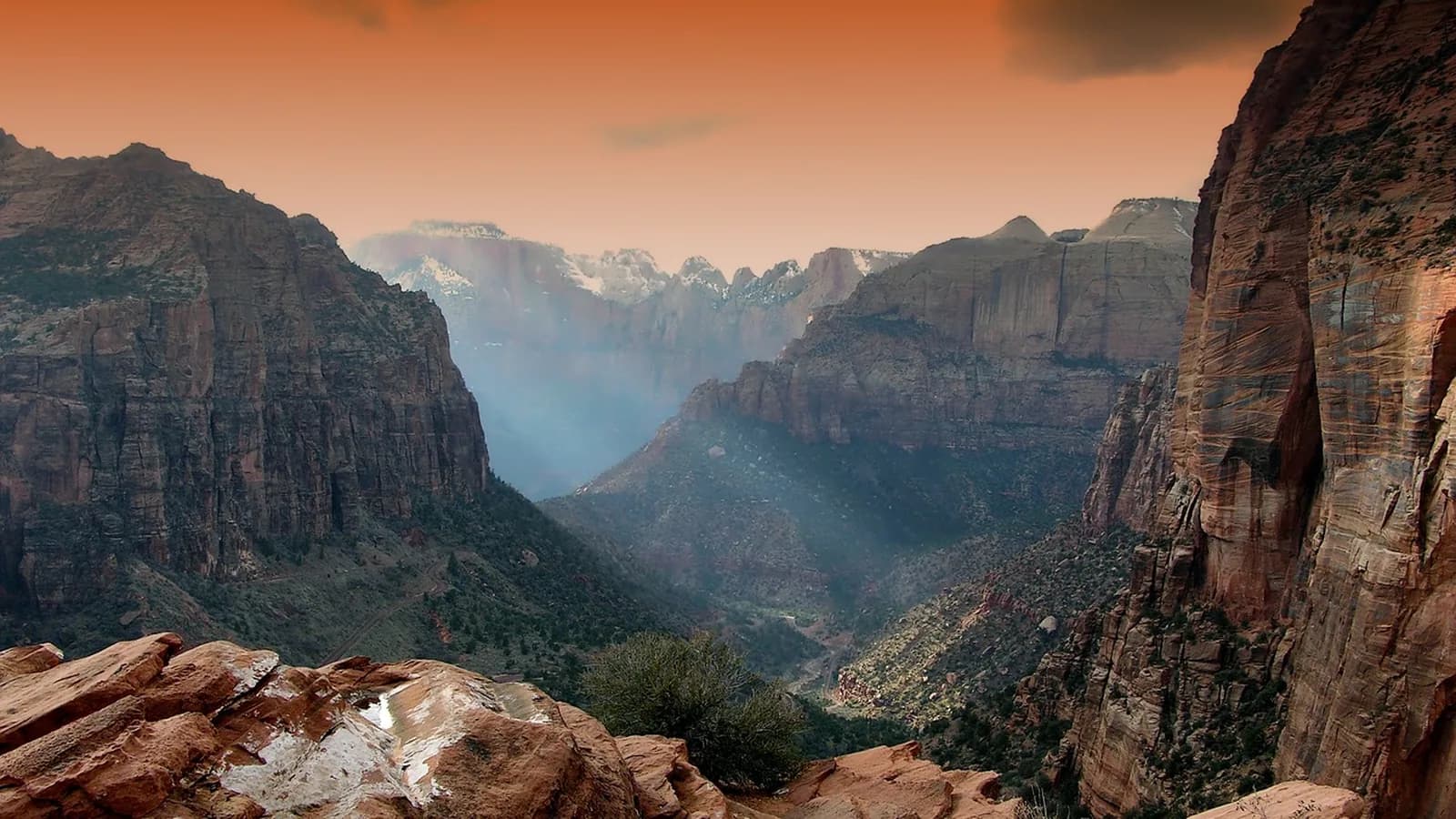
Most Utah universities and colleges sit 1,300 to 1,400 meters high. The mountains are less than an hour away.
Photo: 12019, via Pixabay
Mountains, altitude and climate in Utah
Most people in Utah live along the Wasatch Front. This strip of cities lies at the foot of the Wasatch Range. It runs from Ogden through Salt Lake City to Provo.
Most universities and colleges in Utah that may give athletic scholarships lie there. They sit 1,300 to 1,400 meters above sea level.
Winters along the Wasatch Front bring snow and frost. Summers are hot and dry. St. George in the far southwest has a desert climate with mild winters.
The Church of Jesus Christ of Latter-day Saints shapes public life in Utah. Many people call its members Mormons.
Brigham Young University in Provo belongs to the church. It follows church rules on campus.
3 regions with universities and colleges in Utah
Logan lies in the north and St. George in the southwest. The drive between them takes more than 6 hours. Your region decides your climate and your travel times.
- Wasatch Front
- Salt Lake City, Ogden, Orem and Provo form one strip of cities. The University of Utah and Brigham Young University play in Division I. So do Weber State University and Utah Valley University. Division I is the top level of the NCAA college sports association. Westminster University in Salt Lake City plays in Division II.
- Cache Valley in the north
- Logan lies in the Cache Valley, north of Salt Lake City. The drive takes about 1.5 hours. Winters there are long and snowy. Utah State University in Logan also plays in Division I.
- Southwest Utah
- Cedar City and St. George lie closer to Las Vegas than Salt Lake City. St. George has hot summers and mild winters. Southern Utah University in Cedar City plays in Division I. Utah Tech University in St. George does too.
Weather, outdoor sport, studies and transport in Utah
Snowy winters on the Wasatch Front
From December to February, Salt Lake City, Provo and Logan get snow and frost. Summers there are hot and dry. St. George in the southwest stays mild in winter.
Ski areas less than an hour away
Several ski areas lie within an hour of Salt Lake City and Provo. Hiking and mountain bike trails start at the edge of most Wasatch Front cities.
Campus rules differ between universities and colleges
Brigham Young University makes all students follow its Honor Code. The code bans alcohol, tobacco, coffee and tea. It also sets a dress code. Public universities and colleges have no religious rules like these. The University of Utah is one example.
Trains along the Wasatch Front
FrontRunner commuter trains link Ogden, Salt Lake City and Provo. Salt Lake City International Airport has direct flights to Amsterdam and Paris.
Every student at Brigham Young University must follow its Honor Code, athletes included. The code bans alcohol, tobacco, coffee and tea.
10 universities and colleges with sports in Utah
The table sorts the universities and colleges in Utah by division. Four-year universities and colleges make up 8 of them. NCAA Division I is the top level. Only NCAA Division I, NCAA Division II and the NAIA may give athletic scholarships. NCAA Division III may not.
| Division | University or college | Roster places | Fees waived in total | University or college |
|---|---|---|---|---|
| NCAA Division I | 7 | 3,803 | US$52,099,418 | |
| NCAA Division II | 1 | 313 | US$1,437,461 |
What each column measures
- Division:
- Division names the association and the level of a university or college. The two NCAA levels D I and D II may give athletic scholarships. D III may not. The NAIA is a smaller second association, and it gives them too.
- Roster places:
- A roster place is one athlete's spot on a team for one season. An athlete who competes in two sports fills two roster places.
- Fees waived in total:
- This is all athletic aid the universities and colleges report for one academic year. Most of it is a discount on their own tuition, housing and meal bills.
US$13,007 athletic aid per roster place in Utah
We add up all athletic aid in Utah. Then we divide it by the number of roster places. A roster place is one spot on a team for one season. Across all states, the figure is US$11,640.
US$53,536,879
Fees waived in total
US$13,007
Fees waived per roster place
All states: US$11,640
4,116
Roster places
Out-of-state students in Utah pay US$13,106 more yearly
International students pay the out-of-state rate at public universities and colleges. A full scholarship covers this rate. With a partial scholarship, you pay part of it yourself. The figure is a median. It covers 6 four-year public universities and colleges in Utah. All of them may give athletic aid.
US$6,760
In-state tuition
US$19,841
Out-of-state tuition
US$13,106
Out-of-state surcharge
Of 8 four-year universities and colleges, 8 reported this figure.
The best-known athletic programs in Utah
- University of Utah
- The University of Utah in Salt Lake City plays in NCAA Division I. Division I is the top NCAA level. Its ski team and its women's gymnastics team have won national titles.
- Brigham Young University
- Brigham Young University in Provo also plays in Division I. It has a strong distance running program. It belongs to a church, so church members pay lower tuition than other students.
Basketball has the most programs in Utah
Skiing and women's gymnastics are the best-known sports at the University of Utah. Its ski team won the NCAA title in 2025. Its gymnastics team has nine NCAA titles, all from 1982 to 1995.
Distance runners in Utah train 1,300 to 1,400 meters above sea level. The air there holds less oxygen than at sea level. Brigham Young University has a long tradition in distance running.
The table counts universities and colleges per sport. A university or college with men's and women's teams in one sport counts once.
| Sport | Universities and colleges with a team | Universities and colleges with a team |
|---|---|---|
| Basketball | 8 | |
| Golf | 8 | |
| Soccer | 8 | |
| Track and cross country | 8 | |
| Volleyball | 8 | |
| Softball | 7 | |
| American football | 6 | |
| Tennis | 5 | |
| Baseball | 4 | |
| Gymnastics | 4 | |
| Swimming and diving | 3 | |
| Lacrosse | 2 |
What each column measures
- Universities and colleges with a team:
- Each university or college counts once per sport. This holds even if it has a men's and a women's team. Only NCAA Division I and II and the NAIA count. Division III gives no athletic scholarships.
3.1% of students in Utah have no US status
In Utah, 3.1% of all undergraduates have no US status. This share counts students at all 10 universities and colleges in the state. Across all states, the share is 3.5%.
3.1%
Share of international students
All states: 3.5%
165,650
Undergraduates
Utah averages -2.2 °C in January, 22.9 °C in July
NOAA, the US weather agency, worked out these averages for all of Utah. They cover the years 1991 to 2020. The yearly average is 9.6 °C. Rain and snow add up to 344 mm a year.
-2.2 °C
Average temperature in January
22.9 °C
Average temperature in July
9.6 °C
Average annual temperature
344 mm
Annual precipitation
2 mistakes applicants from abroad make in Utah
Signing without reading the campus rules
Brigham Young University expects every student to follow its Honor Code. The code has rules on alcohol, coffee and dress. Read the code before you sign. Breaking it can cost you your place at Brigham Young University.Thinking every campus is near Salt Lake City
Southern Utah University and Utah Tech University lie south of Salt Lake City. The drive there takes 4 to 5 hours. Check how far your campus is from the airport before you plan trips home.Utah universities and colleges ranked by athletic aid
The table sorts the universities and colleges by athletic aid per roster place. Each row links to the figures for each sport.
| University or college | City | Division | Roster places | Fees waived per roster place | Fees waived per roster place |
|---|---|---|---|---|---|
| University of Utah | Salt Lake City | D I | 573 | US$29,047 | |
| Utah State University | Logan | D I | 515 | US$14,542 | |
| Brigham Young University | Provo | D I | 712 | US$13,191 | |
| Weber State University | Ogden | D I | 539 | US$10,446 | |
| Southern Utah University | Cedar City | D I | 518 | US$10,065 | |
| Utah Tech University | Saint George | D I | 394 | US$9,796 | |
| Utah Valley University | Orem | D I | 552 | US$7,013 | |
| Westminster University | Salt Lake City | D II | 313 | US$4,593 |
6 questions about athletic scholarships in Utah
What rules apply to students at Brigham Young University in Utah?
How high above sea level are the college towns in Utah?
How many universities and colleges in Utah can offer an athletic scholarship?
What does a year in Utah cost without a scholarship?
How many international students study in Utah?
Which sport do the most universities and colleges in Utah offer?
Sources
Each figure comes from one of these sources. If no source reports a figure, we do not estimate one.
- U.S. Department of Education, Equity in Athletics Data Analysis (EADA) (22 August 2026)
- U.S. Department of Education, College Scorecard (23 August 2026)
- NOAA National Centers for Environmental Information, Climate at a Glance (21 August 2026)
The editorial team of Athletic Scholarships USA writes and checks every text and figure. We are not an agency and do not place athletes at universities and colleges. When an agency would serve you better, we say so.