
College sport divisions in the USA
A division is a level of US college sport with its own scholarship rules. Your division decides if a university or college may give you an athletic scholarship. It also caps how much it may pay.
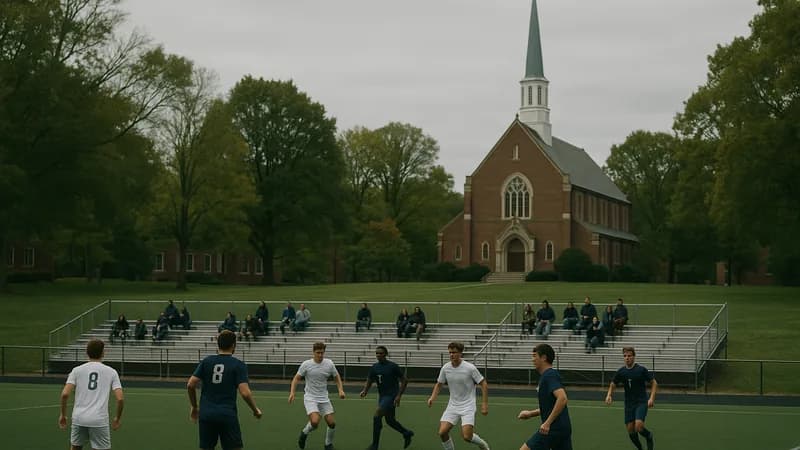
Image: AI-generated.
Purpose of the divisions in US college sport
No law makes an American university or college offer sport. Each one decides how many sports it offers and what it spends on them. It also decides if it gives athletic scholarships.
To compete, a university or college joins an association such as the NCAA. It also joins one of the association's divisions.
A division is a level with its own rules on scholarships, training and competition. Every member must follow them.
In 1973, the NCAA members voted to split the NCAA into three divisions. Large universities and colleges wanted to spend more on sport. Small ones did not want to keep up.
The divisions play at different levels because their budgets differ.
Scholarships, approval and competition years by division
The division decides if a university or college may give athletic scholarships at all. NCAA Divisions I and II and the NAIA allow athletic scholarships. NCAA Division III allows none.
No coach can change these rules. The association also decides who approves you before your first competition. For NCAA Divisions I and II, it is the NCAA Eligibility Center.
Until 2007, its name was the Clearinghouse. It checks your grades and sports history. The NAIA has its own Eligibility Center, with other documents and preparation times.
Each association also sets how many years you may compete. One association may accept a late start or a break, and another may not. Choose your divisions before you write to the first coach.
NCAA Division III and the junior colleges
NCAA Division III has more roster places than Division I or Division II. But its universities and colleges may not give any athletic aid.
A Division III athlete can only get academic aid or need-based aid. Academic aid is for good grades. Need-based aid is for a low family income.
Junior colleges offer two years of study and have their own sports associations. Many athletes start at a junior college. After two years, they move to an NCAA or NAIA university or college.
Our comparison of aid per roster place leaves out both levels. Division III gives no athletic aid. The comparison has no figures on junior colleges.
Universities and colleges, roster places and aid in 3 divisions
| Division | Colleges | Roster places | New places a year | Fees waived in total | Per roster place |
|---|---|---|---|---|---|
| NCAA Division ITop level, highest aid per roster place, hardest to get an offer. | 358 | 201,249 | 50,312 | US$3.4B | US$16,988 |
| NCAA Division IISame NCAA rules as Division I, smaller budgets, more playing time. | 294 | 138,806 | 34,702 | US$844.8M | US$6,087 |
| NAIASeparate association, own approval, more aid per roster place than Division II. | 225 | 95,510 | 23,878 | US$795.5M | US$8,329 |
The column New places a year is our own estimate. Most athletes stay on a team for four years. So about a quarter of all roster places open up each year. All other columns come unchanged from the federal report.
Fees waived per roster place, by association and division
Aid per roster place is the only fair way to compare the three divisions. It comes from one source and uses the same math for each division.
- D INCAA Division IUS$16,988
- D IINCAA Division IIUS$6,087
- NAIANAIAUS$8,329
Total athletic aid of a division divided by its roster places. The result is an average across all sports, men and women. It is no promise for a single athlete.
- NCAA Division I pays US$16,988 per roster place. That is more than twice as much as any other division.
- The NAIA pays US$8,329 per roster place. That puts it above NCAA Division II, which pays US$6,087.
- NCAA Division III gives no athletic aid. The comparison leaves out the junior colleges.
An athletic scholarship lowers what a US university or college charges you. The discount applies to tuition, housing and meals. Most athletes get little or none of it as cash.
Requirements and aid in each division
Each division has its own requirements and its own aid. Each one suits a different type of athlete.


NAIA aid per roster place beats Division II
Most applicants expect Division I first, Division II second and the NAIA somewhere below. But per roster place, the NAIA ranks above NCAA Division II.
NAIA universities and colleges are small and often expensive. So they pay more per roster place.
A fee waiver at one of them adds up to a large amount. At a large public Division II university or college, partial scholarships are smaller.
The figures do not tell you which division fits you. An application to only one division misses most of the open roster places.
Figures from the EADA report for 2024-25
All figures come from the Equity in Athletics Data Analysis, called EADA. Universities and colleges file this report with the US Department of Education every year.
The report for 2024-25 covers 2,037 universities and colleges. We calculate every figure from its raw data.
The report gives aid per university or college and gender, never per sport. So no scholarship figure in this comparison applies to a single sport. An athlete in two sports fills two roster places in the report.
The NCAA and the NAIA publish member numbers. These can differ from the counts per division in the report. The associations count their members. The report counts the universities and colleges that file a report.
Common questions about athletic scholarships in the USA
How do I choose between NCAA Division I, Division II and the NAIA?
How many divisions does American college sport have?
Can I apply to several divisions at once?
Can I change to another division after I enroll?
Sources
Each figure comes from one of these sources. If no source reports a figure, we do not estimate one.
- U.S. Department of Education, Equity in Athletics Data Analysis (EADA) (22 August 2026)
- NCAA, The history of the NCAA (21 August 2026)
The editorial team of Athletic Scholarships USA writes and checks every text and figure. We are not an agency and do not place athletes at universities and colleges. When an agency would serve you better, we say so.