Updated on: 11 November 2026
6 drawbacks of a US athletic scholarship
An athletic scholarship has six main drawbacks. The largest one is time. Division I athletes report a median of 34 hours of sport a week. They also study for a full bachelor's degree.
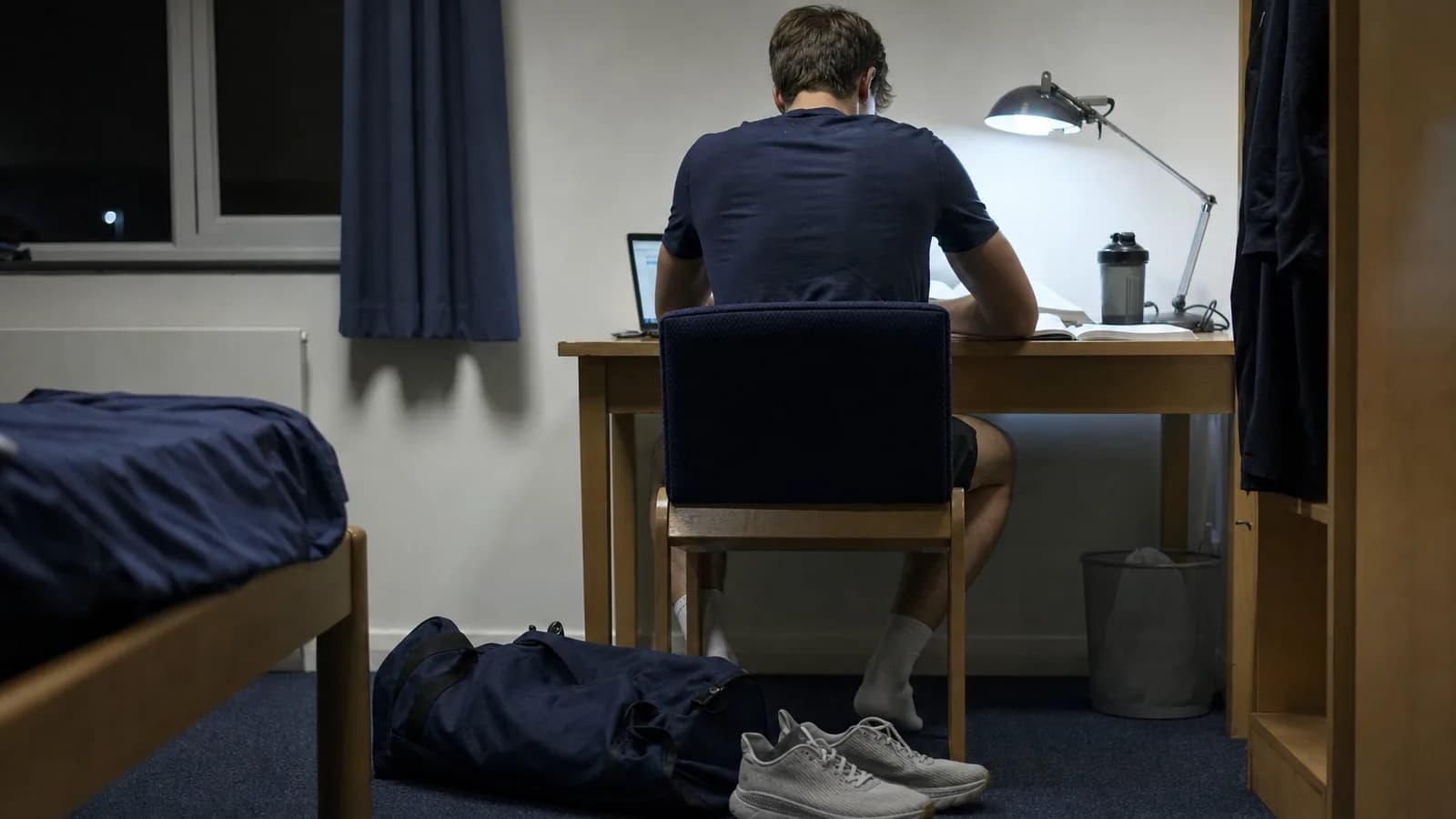
Image: AI-generated.
Drawbacks in 3 key points
A 34-hour sport week in Division I
The NCAA is the largest college sports association. It caps required sport at 20 hours a week in season. Division I athletes still report a median of 34 hours a week. Travel, treatment and voluntary training do not count toward the cap.
Yearly renewal in Division II
A Division II athletic scholarship runs for one academic year. Your university or college tells you by July 1 about renewal. Division I protects renewal only for athletes who had aid in their first year.
About US$28,792 a year left to pay
The average Division I scholarship is US$16,988. At a public university or college, a year costs US$45,780. So the average scholarship covers about 37% of that year. Flights, insurance and visa fees come on top.
6 main drawbacks of an athletic scholarship
The first drawback is a long sport week. The second is a scholarship without a promise to renew it. The third is a season that runs into exams.
Fourth, you still pay part of the cost with a partial scholarship. Fifth, homesickness can hit hard far from home. Sixth, the coach who recruited you can leave.
None of the six alone is a reason to stay at home. Together, they decide if four years in the USA suit you.
1. A sport week of about 34 hours
The NCAA is the largest college sports association. Its Bylaw 17.1.7.1 caps required in-season sport at 20 hours a week. Division I is its top level.
The 2025 GOALS survey asked Division I athletes about their week. They still reported a median of 34 hours of sport a week. They also reported 33.5 hours of study a week.
The 20-hour rule does not count travel, treatment, team meals and voluntary sessions. That explains the gap to 34 hours.
The rule still applies after the House settlement. This legal settlement removed the old scholarship limits.
The rule has stayed the same since 1991. The Division I Manual for 2026-27 still prints it.
Out of season, the limit is eight hours a week. Many athletes still train as much as in season, or more. In the same survey, 74 percent in Division I men's sports said so.
In women's sports, 56 percent said so. Such a week leaves little room for a part-time job.
2. One-year awards in Division II
An athletic scholarship does not last four years by default. NCAA Division II is the second level of the largest college sports association. There, a scholarship runs for one academic year.
By July 1, your university or college answers in writing on renewal.
The NAIA is a smaller second association. There, the rules of your university or college and your written agreement decide. Division I gives a scholarship more protection, but that protection has limits.
During the scholarship term, Division I may not cut aid for injury or performance. It also may not refuse renewal for athletic reasons after first-year aid.
A walk-on is a team member without aid. Some walk-ons get aid only in a later year. The rules then protect them during that term, but not at renewal.
3. Season and exams in the same weeks
Away games and classes fall in the same weeks. No national rule caps the classes you miss.
The Division I Manual is the rulebook of the top NCAA level. Its Bylaw 20.2.4.14 only makes each university or college set its own policy. That policy covers missed classes and games during final exams.
The hour limits apply during exam weeks too. A credit hour is the unit US universities and colleges use to count courses. To compete in Division I, you need six credit hours every term.
You also need 18 credit hours per academic year. Before your second year, you need 24 in total.
If you miss these credit-hour targets, you may not compete. An athlete who may not compete can lose the aid. Degrees with long afternoon lab sessions clash most often with training.
4. Costs that remain despite a partial award
Most athletic scholarships leave a bill. A roster place is one spot on a team's list of athletes. In 2024-25, the average Division I scholarship was US$16,988 per roster place.
A year at a public university or college cost US$45,780. So the average Division I scholarship covered about 37% of it. Division II universities and colleges averaged US$6,087.
Universities and colleges in the smaller NAIA association averaged US$8,329.
You also pay the US$350 SEVIS fee and the US$185 visa fee. SEVIS is the US register of international students. Flights, health insurance and the summer weeks when residence halls close come on top.
Your family must prove it can pay the rest. Only then does the university or college issue the Form I-20. You need this form for the visa.
It is close to impossible to earn the missing money in the USA. An F-1 student visa limits your campus job during the semester. The limit is 20 hours a week.
NIL deals are deals in which brands pay athletes for advertising. For F-1 students, money from these deals carries legal risk.
5. Homesickness and mental strain in season
Homesickness and stress hit many international athletes. Most former athletes name October as the hardest month. By then, the new feeling has faded and the season gets hard.
The NCAA ran a health and wellness study in 2022-23. It asked about 23,000 athletes in all divisions.
In women's sports, 44 percent said they felt overwhelmed. In the same group, 35 percent reported mental exhaustion. In men's sports, the shares were 17 and 16 percent.
Every Division I university or college must offer its athletes mental health services. Bylaw 16.4.2 sets this rule.
Before you sign, ask who provides these services. Ask if a counselor sees athletes in season. Also ask how often you can fly home.
6. A change of head coach
The coach is a main reason to choose a university or college. But the coach can leave. A new head coach cannot cut an NCAA scholarship during its term.
In Division I, the new coach also may not refuse renewal for athletic reasons. This holds if you had aid in year one.
The new coach still decides your playing time and your role. The NCAA transfer portal lists athletes who want to change their university or college.
In Division I, you get 30 days to enter the transfer portal. They start the day after the head coach leaves or announces leaving.
The transfer window is shorter in basketball and ice hockey. In Division II, the new coach can affect the next yearly renewal. Ask how long the coach's contract runs and if the assistants would stay.
Drawbacks weigh most for 5 groups of athletes
The drawbacks weigh most for families who need a full scholarship. Most scholarships cover only part of the cost. Division II and the NAIA average less per roster place than Division I.
The drawbacks also weigh more for students in degrees with long afternoon lab sessions.
They also weigh more for athletes who hope to turn pro. In some sports, few college players do.
The NBA is the professional basketball league. The NCAA estimates NBA teams drafted 1.0 percent of college men's basketball players.
Some Division II and NAIA recruits need certainty for four years. They should ask for the renewal policy in writing.
Some athletes have very close ties at home or a history of anxiety. They should plan their support before they arrive.
6 drawbacks and the step that reduces each
Each row names one drawback and the figure behind it. It also names one step to take before you sign.
| Drawback | What it means in numbers | What you can do before signing |
|---|---|---|
| 1. Long sport week | Rule: 20 required hours in season. Survey: median of 34 hours in Division I | Ask current athletes about a normal week in season |
| 2. No renewal promise | Division II: one academic year, answer by July 1. Division I: protected only with first-year aid | Ask for the renewal and injury policy in writing |
| 3. Season and exams | Division I eligibility: six credit hours per term and 18 per year | Ask for the missed-class policy and the academic support |
| 4. Costs despite the award | Public university or college: about US$28,792 a year after average Division I aid | Compare the total cost per year after the award |
| 5. Homesickness and strain | Felt overwhelmed: 44 percent in women's sports, 17 percent in men's sports | Ask who provides mental health services and when you fly home |
| 6. Coach change | 30-day transfer window in Division I after the head coach leaves | Ask about the coach's contract and the assistant coaches |
You can plan for each drawback. Ask the coach about it in writing before you sign.
Drawbacks: rules and application steps
Funding rules set how long your athletic scholarship runs. Transfer rules apply when a coach leaves. Academic rules set the grades that keep you on the team.
Rules with source and check date
Common questions about athletic scholarships in the USA
What are two disadvantages of an athletic scholarship in the USA?
How many hours a week do college athletes in the USA train?
Does the NCAA 20-hour rule still apply after the House settlement?
Can I get an athletic scholarship in the USA without good grades?
Is an athletic scholarship in the USA guaranteed for four years?
What happens to my athletic scholarship if my coach leaves?
Do college athletes in the USA miss classes because of competitions?
More guides on athletic scholarships
Sources
Each figure comes from one of these sources. If no source reports a figure, we do not estimate one.
- NCAA Division I Manual 2026-27, Bylaws 14.4.3, 16.4.2, 17.1.7 and 20.2.4.14 (11 November 2026)
- NCAA, Question and Answer: Implementation of the House Settlement, May 2026 (11 November 2026)
- NCAA Division II Manual 2026-27, Bylaws 15.5.3 and 15.5.5 (period and renewal of award) and 17.1.6 (hour limits) (11 November 2026)
- NCAA, Guide for the College-Bound Student-Athlete 2026-27, page 28 (figures from the 2025 GOALS study) (11 November 2026)
- NCAA, Current Findings on Student-Athlete Time Commitments, 2025 GOALS study (March 2026) (11 November 2026)
- NCAA, Student-athletes report fewer mental health concerns (13 December 2023) (11 November 2026)
- NCAA, Student-Athlete Health and Wellness Study (11 November 2026)
- NCAA, Probability of Competing Beyond High School (11 November 2026)
- U.S. Department of Education, Equity in Athletics Data Analysis (EADA), 2024-25 (11 November 2026)
- College Board, Trends in College Pricing and Student Aid 2025 (11 November 2026)
- NCAA, Division I Council approves changes to transfer rules (April 2024) (3 November 2026)
- AP, Schools are snatching up transfers in college hoops. That means fewer freshmen on D-I rosters, too (NCAA data, 2 November 2023) (11 November 2026)
- NCAA, Initial-eligibility requirements (6 November 2026)
- NCAA, 2026-27 Guide to International Academic Standards for Athletics Eligibility (11 November 2026)
- NAIA, 2026-27 Official & Policy Handbook, Article I, Section H, Items 5 and 7 (24-week season, day off) (11 November 2026)
- NCAA, Division I Cabinet, report of 3 August 2026 (Proposal 2026-54) (11 November 2026)
- NCAA, Division I Cabinet, report of 6 and 7 October 2026 (Proposal 2026-67) (11 November 2026)
The editorial team of Athletic Scholarships USA writes and checks every text and figure. We are not an agency and do not place athletes at universities and colleges. When an agency would serve you better, we say so.