Updated on: 3 November 2026
Athletic scholarships in women's sports in the USA
Women have better chances of an athletic scholarship in several sports. Title IX is a US law from 1972. It makes universities and colleges with federal funding give women equal athletic opportunity.
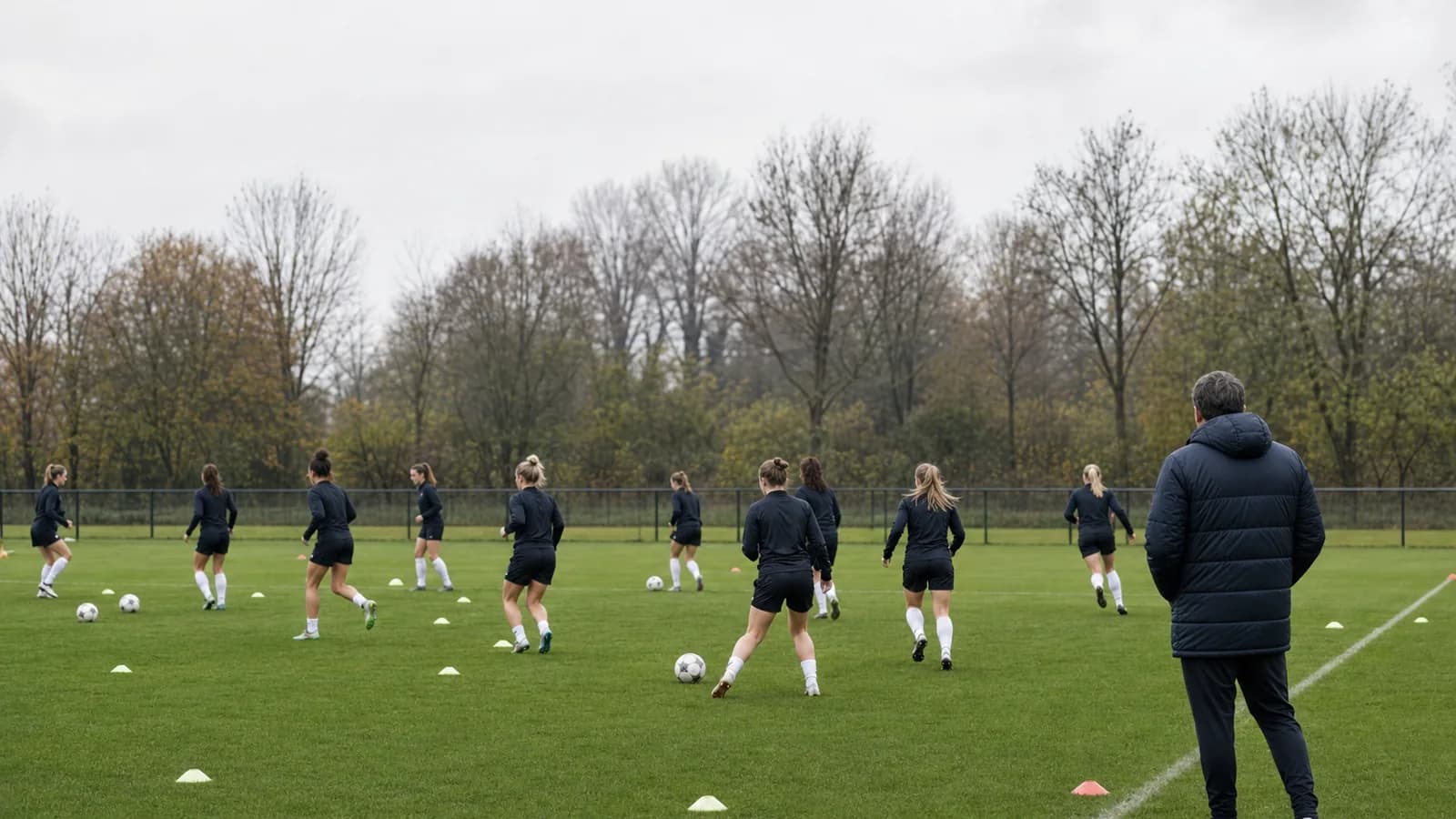
Image: AI-generated.
Women's sports in 3 key points
Title IX ties athletic aid to participation
Title IX is the US law against sex discrimination in education. It makes a university or college split its athletic aid between women and men. The split follows the number of women and men who compete. The law does not demand the same number of scholarships for both.
More women's teams than men's at every level
The federal sports report for 2024-25 counts teams at every level. Division I had 3,119 women's teams and 2,475 men's teams. Division II had 2,166 women's teams and 1,837 men's teams. The NAIA is a smaller second association. Its members reported 1,470 women's teams and 1,423 men's teams.
Your level still decides the offer
More teams mean more coaches who look for women athletes. A coach still funds only athletes who make the team better.
Title IX rules for universities and colleges
Title IX is a section of a US federal law. That law is the Education Amendments of 1972. Title IX forbids sex discrimination in any education program with federal funding.
The law binds each university or college on its own. It applies at every university or college with federal funding. The NCAA is the largest US college sports association. Title IX applies in its Division I and II and in the smaller NAIA.
The Office for Civil Rights at the US Department of Education enforces Title IX. It checks how a university or college treats its women's and men's teams.
The office also checks how a university or college gives athletic scholarships. It checks whether the sports match the students' interests.
Treatment covers equipment, practice times, travel, coaching, facilities and medical care.
Athletic aid in proportion to participation
The rule 34 CFR 106.37(c) applies Title IX to athletic scholarships. A university or college must give each sex fair chances at athletic awards. These chances must match the number of its women and men who compete.
The Department of Education has explained this rule. It does not demand equal numbers of scholarships for women and men.
Single awards do not need the same value either. The share of the money must follow the share of athletes.
The three-part test for women's teams
The Department of Education uses a three-part test. It checks whether a university or college meets its students' interests in sport.
The test comes from a policy interpretation of 1979. The Department added a clarification in 1996.
A university or college passes if it meets any one of the three conditions. First, its share of women athletes is close to its share of women students.
Second, it keeps adding places for the sex with fewer places. Third, its teams already meet that sex's interests and abilities.
In theory, a university or college could balance its figures by cutting men's teams. The Department of Education calls cutting teams a disfavored practice. It looks for other remedies when a university or college falls short.
Adding a women's team, or making one bigger, fits the Department's guidance.
Women's places that balance Division I football
The House settlement is a court settlement between athletes and the NCAA. It took effect on July 1, 2025. Since then, a Division I football team may carry 105 athletes.
A university or college with football needs many women's places in other sports. This keeps its share of women athletes close to its share of women students.
Among women's sports, rowing has the most places per team. Its Division I roster limit is 68 athletes.
New NCAA championships for women's sports
The NCAA, the largest US college sports association, supports new women's sports. It does so with its Emerging Sports for Women program.
In 1994, the NCAA adopted the advice of its Gender Equity Task Force. It created the program to close the athlete gap between men's and women's sports.
Women's wrestling went through the Emerging Sports for Women program. It held its first NCAA championship in March 2026 in Coralville, Iowa.
In January 2026, the NCAA decided to add two championships. They are acrobatics and tumbling, and stunt. The NCAA plans the first titles for spring 2027.
The NCAA now lists equestrian, flag football, rugby and triathlon as emerging women's sports.
Softball and field hockey for women only
Softball, field hockey and beach volleyball have college championships for women only. In these three sports, no men's team competes for budget or facilities.
The NCAA and the NAIA run softball for women only. The EADA filing is the yearly federal sports report of each university or college. For 2024-25, it counts 305 women's softball teams in Division I.
Division II has 271 of them, and the NAIA has 184. Baseball is a separate men's sport with its own budget.
Field hockey is an NCAA sport for women only. The NCAA holds titles in Divisions I, II and III. The NAIA does not run field hockey.
The EADA filing counts 81 field hockey teams in Division I. Division II has 34 field hockey teams.
Beach volleyball, rowing and gymnastics for women
Beach volleyball has NCAA and NAIA championships for women only. The EADA filing counts 69 women's teams in Division I. Division II has 24 of them, and the NAIA has 28.
The filing lists only 3 men's beach volleyball teams. All of them are in Division II and the NAIA.
At US universities and colleges, almost all rowing and gymnastics teams are women's teams. The NCAA holds a rowing championship for women only. Men's rowing runs outside the NCAA under other bodies.
The EADA filing counts 91 women's rowing teams in Division I. It counts 33 men's teams.
Division I gymnastics has 63 women's teams and 9 men's teams. Division II and the NAIA have no men's gymnastics team at all.
Volleyball has teams for both women and men. Division I has 340 women's teams and 28 men's teams.
Women fill fewer roster places than men
The number of teams says little about the number of athletes. Team sizes differ a lot between sports.
The EADA filing is the yearly federal sports report. For 2024-25, Division I universities and colleges reported 95,768 women as athletes. They reported 105,481 men.
So women made up 47.6 percent of athletes in Division I. In Division II, the share of women was 41.9 percent. In the NAIA, it was 39.4 percent.
Most of the gap comes from American football. Division I alone has 258 football teams with 31,190 athletes. No women's sport has rosters of that size.
So a university or college can have more women's teams than men's teams. It can still have more men on its rosters.
Athletic aid by sex in Division I
Division I universities and colleges gave women 1.59 billion dollars in athletic aid. For men, it was 1.83 billion dollars.
Women got 46.5 percent of the Division I aid. That is close to their share of athletes.
In Division I, women got 16,577 dollars per athlete and men 17,340.
In Division II, women got 6,523 dollars per athlete and men 5,750. In the NAIA, women got 7,775 dollars and men 8,344.
So women do not get more athletic scholarship money in total. Their advantage lies in certain sports. There, the women's side has more teams and more places than the men's side.
Women's scholarship limits in Division I until 2025
Division I is the top level of the NCAA. Until June 30, 2025, the NCAA capped scholarships per team there. In many sports, the women's limit was higher than the men's.
Women's soccer had 14 scholarships, and men's soccer had 9.9. Women's swimming also had 14, against 9.9 for men.
Women's track and field and cross country had 18 scholarships. Men had 12.6. Women's volleyball had 12 full scholarships, against 4.5 for men.
Women's rowing had 20 scholarships. Men's rowing had no NCAA scholarship limit. The NCAA does not run rowing for men.
Roster limits for women's teams since July 2025
The House settlement is a court settlement between athletes and the NCAA. On July 1, 2025, roster limits replaced the Division I scholarship limits. A roster limit is the most athletes a team may have.
Universities and colleges that joined the settlement may fund every roster place.
Women's roster limits are 68 in rowing and 27 in field hockey. They are 25 in softball and 19 in beach volleyball. In volleyball, it is 18.
The lacrosse limit is 48 for men and 38 for women. Soccer has 28 places for both.
A roster limit caps the number of athletes on the list. Each university or college decides how many of those places it funds.
Division II and the NAIA stay outside the settlement with their own funding rules. Ask each coach if the university or college opted in. Also ask how many roster places it funds.
Field hockey and rowing for international women athletes
Title IX protects every person in the United States, citizen or not. An international student on a US campus has the same protection as anyone else.
Coaches recruit abroad when they need many women and few Americans play the sport.
Divisions I and II have 2,498 field hockey players in total. Of them, 540 come from outside the United States. That is about one in five.
Field hockey has a wide following in Europe, Argentina, Australia and India.
Women's rowing teams recruit abroad as well. Their large rosters need a steady flow of new athletes.
Many Division I teams recruit tall, fit athletes from other sports. The coaches then teach these athletes to row. A coach first asks for a 2000 meter time on a rowing machine.
First coach contact for the class of 2028
The class of 2028 means athletes who finish school in 2028. Division I coaches may contact this class from June 15, 2026. That date holds in most sports.
In softball and women's lacrosse, the date is September 1, 2026. In women's ice hockey, it is September 8, 2026.
You may write to a coach before those dates. An early message reaches the coach before the roster for your year fills.
Level and partial awards in women's sports
More women's teams mean more coaches who need athletes. But no coach takes an athlete who is not good enough.
A Division I softball or soccer coach compares you with many American players. These players come from the US youth system. The spot goes to the athlete who makes the team better.
Most athletic scholarships are partial. Since July 2025, any Division I sport may split funding among several athletes. So a large roster limit often means many athletes share one budget.
A large roster is a reason to write to a team. It is no reason to expect a full scholarship.
Many universities and colleges seek women for softball, field hockey, beach volleyball and rowing. The men's side has few or no teams. Your results and your video still decide the offer.
The figures leave out Division III. Its universities and colleges give no athletic scholarships.
3,119 women's and 2,475 men's Division I teams
Each cell counts universities and colleges with a team for that sport and sex. A zero means the filing lists no team. A zero for NAIA field hockey means the NAIA does not run the sport.
| Sport | D1 women | D1 men | D2 women | D2 men | NAIA women | NAIA men |
|---|---|---|---|---|---|---|
| Softball | 305 | 0 | 271 | 0 | 184 | 0 |
| Field hockey | 81 | 0 | 34 | 0 | 0 | 0 |
| Beach volleyball | 69 | 0 | 24 | 2 | 28 | 1 |
| Rowing | 91 | 33 | 14 | 3 | 2 | 2 |
| Gymnastics | 63 | 9 | 15 | 0 | 2 | 0 |
| Volleyball | 340 | 28 | 282 | 40 | 205 | 61 |
| Lacrosse | 127 | 72 | 110 | 77 | 32 | 28 |
| Soccer | 342 | 206 | 256 | 206 | 194 | 191 |
| Bowling | 39 | 0 | 37 | 7 | 65 | 61 |
| Water polo | 37 | 27 | 8 | 6 | 3 | 4 |
| Basketball | 356 | 358 | 293 | 292 | 219 | 219 |
| Ice hockey | 30 | 43 | 10 | 19 | 4 | 8 |
| Wrestling | 3 | 71 | 34 | 77 | 41 | 69 |
| Football | 0 | 258 | 0 | 156 | 0 | 98 |
| All sports in the filing | 3,119 | 2,475 | 2,166 | 1,837 | 1,470 | 1,423 |
Some universities and colleges need more women athletes for their Title IX balance. They keep recruiting women, also from abroad.
Women's sports: rules and application steps
The Division I roster limits set how many athletes a women's team may have. The funding rules set how much aid each of those places may get.
Rules with source and check date
Application steps with their dates
Common questions about athletic scholarships in the USA
Does Title IX apply to international students at US universities and colleges?
Which college sports in the USA have championships for women only?
Do women receive more athletic scholarship money than men at US universities and colleges?
Does Title IX require the same number of athletic scholarships for women and men?
Can a woman get a rowing scholarship in the USA without having rowed before?
More guides on athletic scholarships
Sources
Each figure comes from one of these sources. If no source reports a figure, we do not estimate one.
- U.S. Department of Education, Title IX and Athletics (3 November 2026)
- U.S. Department of Education, Q and A: Intercollegiate Athletics Policy Three-Part Test, Part Three (3 November 2026)
- 20 U.S. Code 1681, Sex (Title IX of the Education Amendments of 1972) (3 November 2026)
- 34 CFR 106.37, Financial assistance (athletic scholarships) (3 November 2026)
- NCAA, Emerging Sports for Women (3 November 2026)
- NCAA, NCAA to add four new championships (3 November 2026)
- NCAA.com, McKendree claims first NCAA women's wrestling championship (3 November 2026)
- U.S. Department of Education, Equity in Athletics Data Analysis (EADA), 2024-25 (3 November 2026)
- NCAA, DI Board of Directors formally adopts changes to roster limits (20 August 2026)
- NCAA, Question and Answer: Implementation of the House Settlement (updated 29 May 2026) (6 November 2026)
- NCAA, 2026-27 Division I Manual, Bylaw 17.2 (roster limits) (6 November 2026)
- College Sports Commission, Participating Schools (6 November 2026)
- College Board, Trends in College Pricing and Student Aid 2025 (20 August 2026)
- NCAA, 2026-27 Division II Manual, Bylaw 15.02.6 (full grant-in-aid, effective 1 August 2026) (11 November 2026)
The editorial team of Athletic Scholarships USA writes and checks every text and figure. We are not an agency and do not place athletes at universities and colleges. When an agency would serve you better, we say so.