Updated on: 6 November 2026
Options after a US bachelor's degree
You have four options after your bachelor's degree. You can work in the USA, turn professional, start a master's or go home. Whatever you choose, prepare it in your third year.
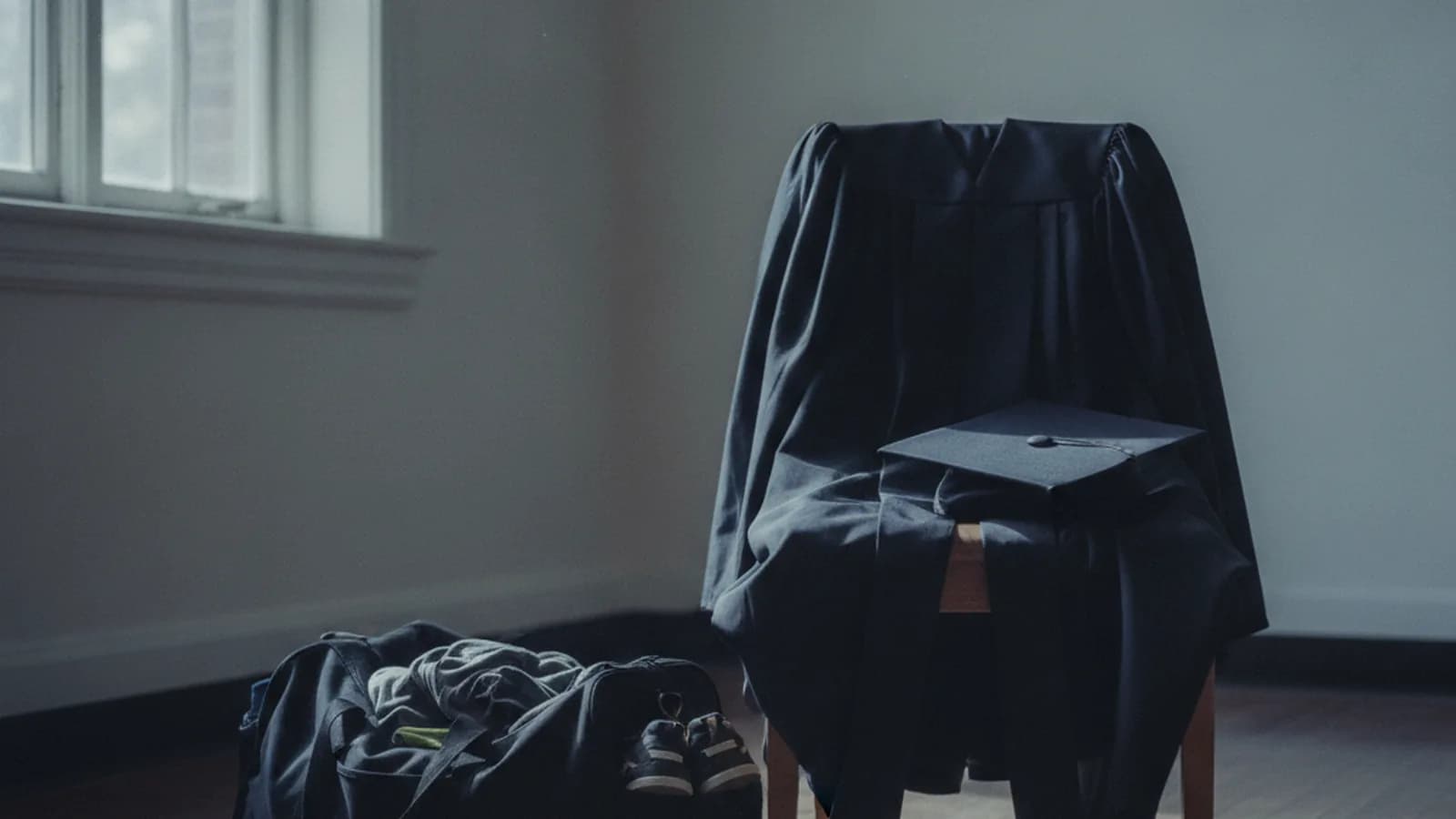
Image: AI-generated.
After graduation in 3 key points
Working in the USA after graduation
The F-1 student visa includes a period of practical training, called OPT. OPT is a work permit for after you graduate. Degrees in science and technology qualify for a longer period. The rules changed in 2026, so start the application in your third year.
Scouts at US college competitions
In several sports, pro scouts now watch college sport more than any other level. In other sports, college sport is one route among several. Find out which is true for your sport before your final season.
Most graduates go home with the degree
Going home with the degree is the most common path. You bring four years of competitive sport and a recognized degree. You also bring working English and contacts on two continents. That makes you a strong applicant on any job market.
Visa status and the five-year eligibility period
Your immigration status decides what you can do in the USA after you graduate. The athletics department does not handle it. Your international student office does, and its deadlines fall well before graduation.
The US government wanted a new rule from 15 September 2026. It would admit F-1 students only until the end date on their Form I-20. The Form I-20 is the visa document from your university or college.
A federal court suspended that rule on 14 September 2026. So F-1 students still keep their status for as long as they study.
NCAA eligibility, your right to compete in college sport, runs for five years. A bachelor's degree takes four years.
Plan the fifth year with the international student office if the I-20 rule starts. That year may fall outside the period on your I-20.
Career talk with your coach in year three
Talk to your coach about your plans in your third year. Coaches know what their former athletes went on to do. They also know which agents and scouts follow the team.
The talk helps more a year early than three months before your last competition.
Learn the rules on the transfer portal before you need them. The NCAA transfer portal lists athletes who want to change university or college. A fifth season elsewhere depends on your sport, injuries and used eligibility.
April of your final year is too late to find out.
Ask your coach straight out whether professional sport is realistic for you. The coach has watched you for four years and judges that best.
Degree, internships and a master's
Most college athletes use up their eligibility and earn their degree. They then start a career outside sport.
You trained and competed for four years next to a full degree. That shows an employer you can handle a heavy workload.
Prepare the move early. Do internships in the summers, and build a professional network during your studies. Check whether your degree needs an addition at home.
All of this is much easier in year two than in year four.
A master's in the USA is the fourth option. Some athletes still have eligibility, the right to compete, after their bachelor's degree. They use it as graduate students, at the same university or college or elsewhere.
Decide in your third year what comes after your bachelor's degree. The applications for work in the USA and for a master's start early.
The five-year clock leaves one spare year
The clock gives you five years to compete, and a bachelor's degree takes four. A long injury, new major or transfer must fit into the spare year.
After graduation: rules and application steps
Your visa status decides how long you may stay in the USA after graduation. The NCAA transfer rules decide if you can switch university or college before that.
Rules with source and check date
Application steps with their dates
Common questions about athletic scholarships in the USA
Can I work in the USA after graduating from a US university or college?
What is a fifth year in US college sport, and do I get one?
Do European employers, universities and colleges recognize a US bachelor's degree?
What happens if I leave my US university or college early?
More guides on athletic scholarships
Sources
Each figure comes from one of these sources. If no source reports a figure, we do not estimate one.
- DHS, final rule on a fixed time period of admission (20 August 2026)
- DHS, Establishing a Fixed Time Period of Admission (Final Rule), 91 FR 44976 (6 November 2026)
- NAFSA, Legal Challenge to the Final Rule Ending Duration of Status (6 November 2026)
- Study in the States, final rule FAQ (20 August 2026)
- Ogletree Deakins, analysis of the final rule (20 August 2026)
- NCAA, 2026-27 Division I Manual, Bylaw 13.1.1.4 and Figure 13-1 (transfer windows) (6 November 2026)
- NCAA, Division I Council approves changes to transfer rules (April 2024) (3 November 2026)
- AP, Schools are snatching up transfers in college hoops. That means fewer freshmen on D-I rosters, too (NCAA data, 2 November 2023) (11 November 2026)
The editorial team of Athletic Scholarships USA writes and checks every text and figure. We are not an agency and do not place athletes at universities and colleges. When an agency would serve you better, we say so.