Scholarships and who pays
Renewal and cuts of athletic scholarships
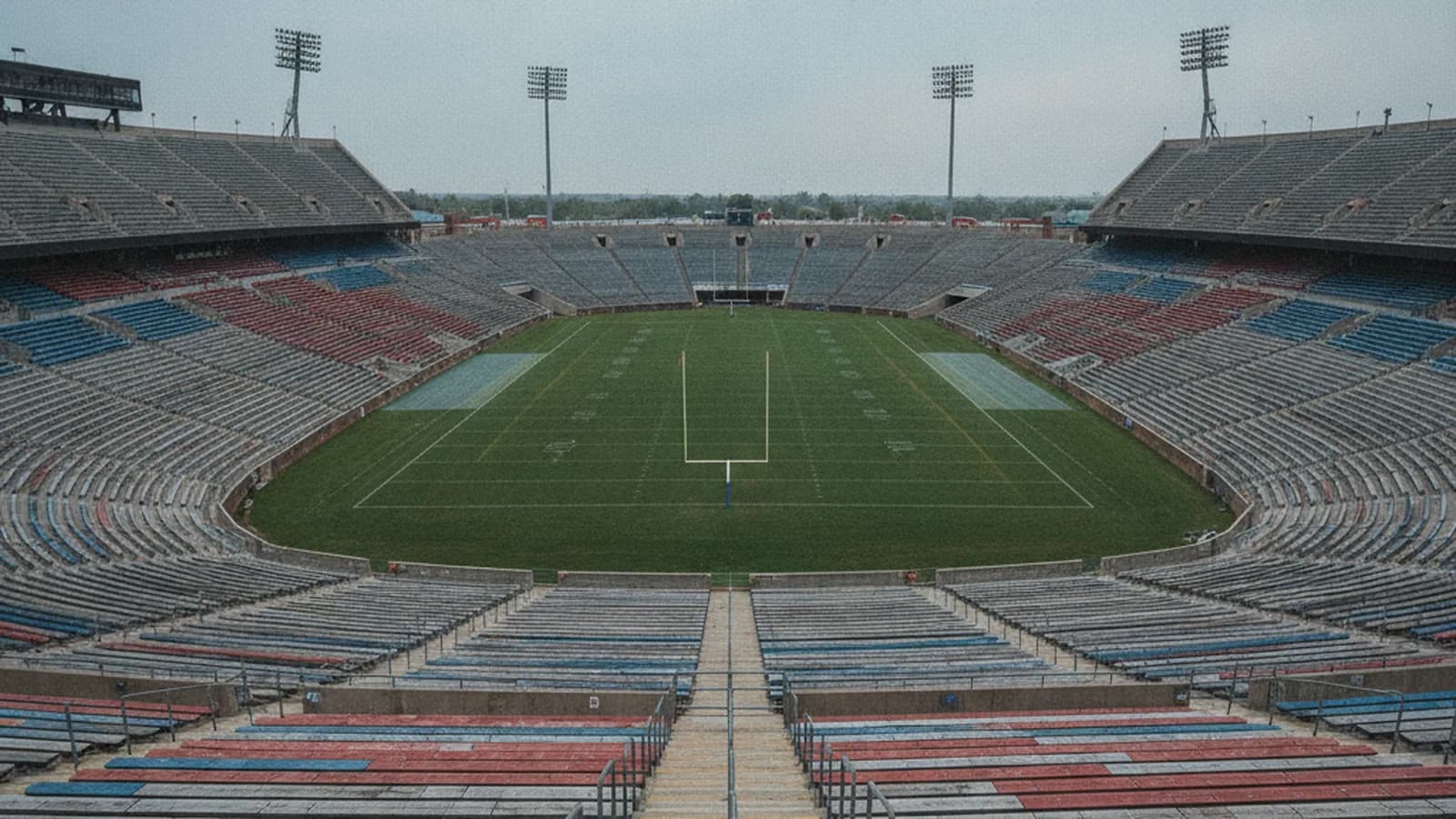
Image: AI-generated.
Requirements under this rule
- Division I universities and colleges may reduce or end athletic aid for six reasons. All six concern the athlete's own conduct.
- The six reasons are ineligibility, fraud, serious misconduct and quitting the team. Breaking a non-athletic condition and a transfer notice also count. The rule is Bylaw 15.3.4.1.
- Division I bans cuts during the award for performance, injury or illness. The same holds for any other athletic reason. The rule is Bylaw 15.3.4.2.
- A nonrenewal means no aid from the university or college for the next year. Athletic reasons never justify a nonrenewal for athletes funded in their first year. The rule is Bylaw 15.3.4.3.
- A Division I award runs for at least one academic year. It runs at most to the end of your five-year period of eligibility.
- The university or college pays a one-year award in equal parts per term. The rule is Bylaw 15.3.3.1.
- The university or college decides each renewal by July 1. The deadline falls before each academic year in Division I and Division II. The rules are Bylaws 15.3.6.1 and 15.5.5.1.
- The regular financial aid office tells you the decision in writing. The athletics department does not send it.
- A Division I renewal can count as a reduction. This happens if it covers fewer years than the original agreement. It also happens if the average amount per year is lower.
- A shorter renewal that runs to the end of your eligibility is the exception. The rule is Bylaw 15.3.2.3.1.
- Every reduction, cancellation or nonrenewal gives you the right to a hearing. A body outside the athletics department holds it. The rule is Bylaw 15.3.2.3.
- Division I allows no cut during the award before your chance at a hearing. The rule is Bylaw 15.3.4.1.1.
- A Division II award always lasts one academic year. The rule is Bylaw 15.5.3.1.
- Notice of the hearing must reach you within 14 days of the decision. The hearing must take place within 30 days of your request. The rule is Bylaw 15.5.2.4.
- A Division II coach may say that athletics will recommend renewal for four years. The coach must add that renewal does not happen on its own.
- The university or college may not promise to continue aid after an injury. The rules are Bylaws 15.5.3.1.2 and 15.5.3.1.3.
- Some Division I athletes first get athletic aid after the first year. They may lose it after the award period. They then have 30 days to enter the transfer portal.
- The NCAA's transfer portal lists athletes who want to change universities or colleges. The window stays closed if the athlete's own conduct caused the cut. The rule is Bylaw 13.1.1.4.1.1.2.
- The NAIA is a separate association from the NCAA. It caps how much aid a student and a team may get.
- The NAIA Handbook 2026-27 has no rule on how long an award lasts. It also has no rule on renewals or reductions.
Renewal and cuts in the NCAA and NAIA
Each row covers one point of the rule as of November 2026. Where a bylaw exists, the row names it too.
| Rule point | NCAA Division I | NCAA Division II | NAIA |
|---|---|---|---|
| Length of an award | At least one academic year, at most to the end of the five-year period. Bylaw 15.3.3.1 | One academic year, no more and no less, Bylaw 15.5.3.1 | No national rule. The university or college sets it |
| Cut during the award for performance or injury | Not permitted under Bylaw 15.3.4.2 | Not permitted under Bylaw 15.5.4.3 | No national rule |
| Nonrenewal for performance or injury | Not permitted with first-year athletic aid at the university or college. Bylaw 15.3.4.3 | Permitted at the end of the one-year term | No national rule |
| Reasons that permit a cut | Ineligibility, fraud, serious misconduct, quitting, a broken non-athletic condition, transfer notice. Bylaw 15.3.4.1 names these 6 | Ineligibility, fraud, serious misconduct, quitting, transfer notice. Bylaw 15.5.4.1 names these 5 and non-athletic conditions in the agreement | The policy of the university or college and the agreement decide |
| Renewal decision | By July 1, in writing, from the financial aid office, Bylaw 15.3.6.1 | By July 1, in writing, from the financial aid office, Bylaw 15.5.5.1 | No national rule |
| Hearing | Required, before a body outside the athletics department, Bylaw 15.3.2.3 | Required. Notice within 14 days. Hearing within 30 days, Bylaw 15.5.2.4 | No national rule |
| Written notice of transfer | Aid may end when that term ends. It may end at once if you give notice between terms | Aid may end at the end of that academic year. The agreement for the next year may fall away | No national rule |
| Roster cuts under the House settlement | Roster limits may not reduce the aid of athletes who held it before 2025-26. Source: NCAA Q&A C4 | No roster limits | No roster limits |
Transfer window after a nonrenewal since January 2026
Bylaw 15.3.4 holds the renewal guarantee for athletes funded in their first year. Its current wording has applied in Division I since August 1, 2024.
The House settlement has capped the number of athletes per team since 1 July 2025. It no longer caps scholarships.
The NCAA ruled on the aid of athletes who held it before 2025-26. A university or college may not cut or drop that aid over roster limits. Source: NCAA Q&A of May 29, 2026, question C4.
A new rule helps athletes funded only after the first year. It took effect on January 14, 2026.
Athletes funded only after year one have no renewal guarantee. Losing that aid gives them 30 days to enter the transfer portal.
The window stays closed if the athlete's own conduct caused the cut. Failing grades are one example.
First-year aid protects every later Division I renewal
The Division I renewal guarantee asks only one question. Did your university or college give you athletic aid in your first full-time year? There is no minimum amount.
Take a small award that starts at once. Compare it with an offer that pays only from the second year. The small award protects you better.
In Division II, ask for the written policy on injured athletes and on renewals. The manual forbids the coach to promise either.
In the NAIA, ask the financial aid office for the same in writing. No national rule covers it.
A cut also changes the funding on an international student's Form I-20. The Form I-20 is the document you need for the F-1 student visa. Tell the international student office as soon as the July 1 letter arrives.
Example of a coach change in rowing
Fenna from Utrecht rows in Division I. Her university or college is in the House settlement. She signs a one-year award worth half a full scholarship in her first year.
The head coach leaves in April. The new coach drops her from the first boat.
The new coach cannot cut the award during the year. The rule is Bylaw 15.3.4.2.
Fenna had athletic aid in her first year. So the financial aid office must decide on renewal by July 1.
The office may not lower the award for an athletic reason. The rule is Bylaw 15.3.4.3.
Fenna may want to follow her old coach. She then has 30 days to give notice of transfer.
The 30 days start the day after the coach leaves. The rule is Bylaw 13.1.1.4.1.1.1.
Division II is different. There, she could lose her award on July 1 for athletic reasons.
Protected athletes and the roster limit
Bylaw 17.2.2 applies to Division I universities and colleges in the House settlement. They must list every athlete with athletic aid on the roster. Bylaw 15.3.4.3 protects the aid of athletes funded from their first year.
The NCAA Q&A covers both rules for athletes who held aid before 2025-26. The NCAA has not said what happens to athletes who arrived later. The question matters when a coach no longer wants them on a full roster.
The NAIA leaves renewal to its universities and colleges. No public collection of their policies exists. Read the policy of each NAIA university or college you consider.
Common questions about athletic scholarships in the USA
Can a university or college take away an athletic scholarship?
How long does an athletic scholarship last in Division I?
When must an NCAA university or college decide on renewing my athletic scholarship?
Can a new head coach refuse to renew my Division I athletic scholarship?
Does the House settlement roster limit cost me my athletic scholarship?
Who runs the hearing when a university or college cuts my athletic scholarship?
Does Division II guarantee an athletic scholarship for four years?
Does the NAIA protect athletic scholarships against cuts?
Rules for your athletic scholarship in the USA
Sources
Each figure comes from one of these sources. If no source reports a figure, we do not estimate one.
- NCAA, 2026-27 Division I Manual, Bylaws 13.1.1.4.1.1, 15.3.2 to 15.3.6 and 17.2.2 (period of award, reduction, renewal, hearing, roster) (11 November 2026)
- NCAA, 2026-27 Division II Manual, Bylaws 15.5.2 to 15.5.5 (period of award, reduction, renewal, hearing) (11 November 2026)
- NCAA, Question and Answer: Implementation of the House Settlement (updated 29 May 2026), question C4 (11 November 2026)
- NCAA, Division I Student-Athlete Core Guarantees (11 November 2026)
- NAIA Handbook 2026-2027, Bylaws Article II Section B and Council of Presidents Policy XIII (11 November 2026)
The editorial team of Athletic Scholarships USA writes and checks every text and figure. We are not an agency and do not place athletes at universities and colleges. When an agency would serve you better, we say so.