Scholarships and who pays
Scholarship limits per team in each sport
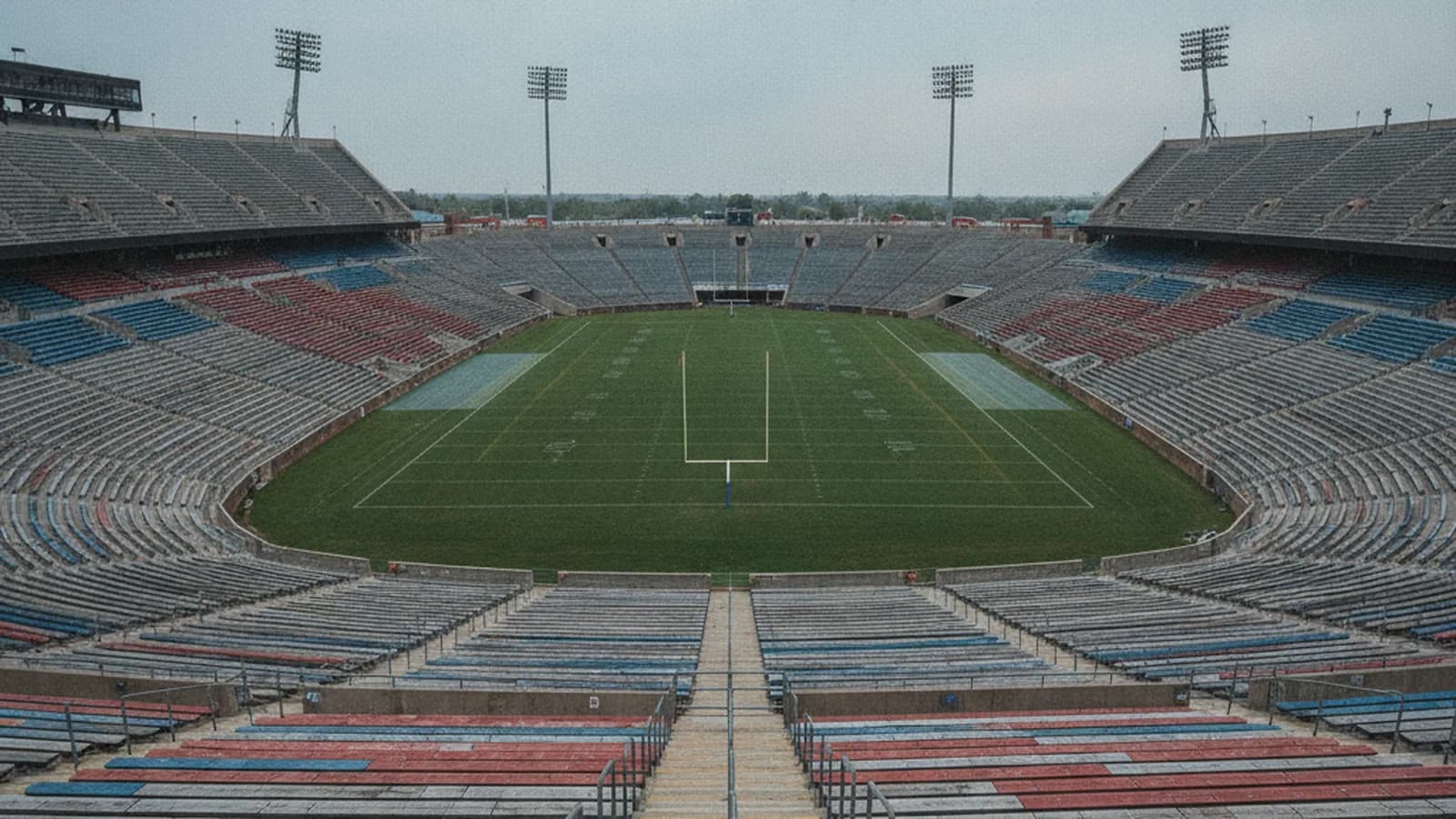
Image: AI-generated.
Requirements under this rule
- Division II and the NAIA cap the total value of athletic aid per team. The NAIA is a separate association, smaller than the NCAA. The coach may split the team's aid into partial scholarships.
- The rules call this split of team aid equivalency. Source for Division II: Division II Manual 2026-27, Bylaw 15.4.2. Source for the NAIA: NAIA Handbook 2026-27, Council of Presidents Policy XIII.
- Division II adds up each athlete's aid for tuition, fees, food and housing. It compares the sum with a full scholarship at that university or college. The result is the athlete's share of a full scholarship.
- The shares of all funded athletes together may not go over the team limit. The rule is Bylaw 15.4.2.2.
- Division II counts only athletic aid. Athletic aid is money from the athletics department. It is also any aid you get only if you compete.
- An academic scholarship that asks nothing of your sport stays outside the limit. The rules are Bylaws 15.02.2 and 15.4.1.
- Division II sets one more cap for men's teams other than football and basketball. These teams may share at most 60 full scholarships per university or college. The rule is Bylaw 15.4.2.1.1.1.
- The NAIA counts all aid that the university or college funds or controls. Academic scholarships count too. GPA stands for grade point average.
- Aid to returning students with a cumulative GPA of 3.60 does not count. Aid at a GPA of 3.30 to 3.59 counts half. The rule is Policy XIII, Section G.
- The NAIA caps the aid for one student. The cap covers tuition, mandatory fees, books and supplies, and room and board.
- The NAIA sets no limit on how many athletes a team may carry. Sources: Bylaws Article II, Section B, and Policy XIII, Section D.
- Some Division I universities and colleges stay outside the House settlement. Their athletic aid may not go above the old limits.
- The 2024-25 Division I Manual lists these old limits. Higher aid brings a university or college under the settlement and its roster limits.
- Division I teams outside the settlement still have the old limit. They may spread it over any number of athletes. This freedom also covers the former head-count sports.
- Head-count sports allowed full scholarships only. Women's volleyball was one, with 12 funded athletes, no more and no fewer. Sources: NCAA Q&A, questions B4 and D6.
- A Division I conference is a league of universities and colleges. A conference may set a lower roster limit than the House settlement.
- The lowest allowed limit is the sport's cap in the 2024-25 Division I Manual. Source: NCAA Q&A, question A15.
Scholarship and roster limits in 21 sports
Each row is one team. The first number column counts athletes. The other three count athletic aid in full scholarships. Division III gives no athletic aid and has no column.
| Sport and team | Division I roster limit in the settlement | Old Division I scholarship cap outside the settlement | Division II scholarship cap | NAIA scholarship cap |
|---|---|---|---|---|
| Soccer, men | 28 | 9.9 | 9.0 | 12 |
| Soccer, women | 28 | 14 | 9.9 | 12 |
| Tennis, men | 10 | 4.5 | 4.5 | 5 |
| Tennis, women | 10 | 8, head count | 6.0 | 5 |
| Basketball, men | 15 | 13, head count | 10.0 | 8 |
| Basketball, women | 15 | 15, head count | 10.0 | 8 |
| Baseball, men | 34 | 11.7 | 9.0 | 12 |
| Softball, women | 25 | 12 | 7.2 | 10 |
| Track and field, men | 45 | 12.6, shared with cross country | 12.6, shared with cross country | 12 |
| Track and field, women | 45 | 18, shared with cross country | 12.6, shared with cross country | 12 |
| Cross country, men | 17 | 5 without a track team | 5 without a track team | 5 |
| Cross country, women | 17 | 6 without a track team | 6 without a track team | 5 |
| Swimming and diving, men | 30 | 9.9 | 8.1 | 8 |
| Swimming and diving, women | 30 | 14 | 8.1 | 8 |
| Golf, men | 9 | 4.5 | 3.6 | 5 |
| Golf, women | 9 | 6 | 5.4 | 5 |
| Volleyball, men | 18 | 4.5 | 4.5 | 8 |
| Volleyball, women | 18 | 12, head count | 8.0 | 8 |
| Beach volleyball, women | 19 | 6, or 8 without an indoor team | 5.0 | 5 |
| Lacrosse, men | 48 | 12.6 | 10.8 | 12 |
| Lacrosse, women | 38 | 12 | 9.9 | 12 |
| Ice hockey, men | 26 | 18 | 13.5 | Not an NAIA sport |
| Ice hockey, women | 26 | 18 | 18.0 | Not an NAIA sport |
| Field hockey, women | 27 | 12 | 6.3 | Not an NAIA sport |
| Water polo, men | 24 | 4.5 | 4.5 | Not an NAIA sport |
| Water polo, women | 24 | 8 | 8.0 | Not an NAIA sport |
| Wrestling, men | 30 | 9.9 | 9.0 | 10 |
| Wrestling, women | 30 | 10 | 10.0 | 10 |
| Gymnastics, men | 20 | 6.3 | 5.4 | Not an NAIA sport |
| Gymnastics, women | 20 | 12, head count | 6.0 | Not an NAIA sport |
| Fencing, men | 24 | 4.5 | 4.5 | Not an NAIA sport |
| Fencing, women | 24 | 5 | 4.5 | Not an NAIA sport |
| Skiing, men | 16 | 6.3 | 6.3 | Not an NAIA sport |
| Skiing, women | 16 | 7 | 6.3 | Not an NAIA sport |
| Bowling, women | 11 | 5 | 5.0 | 5 |
| Bowling, men | Not an NCAA sport | Not an NCAA sport | Not an NCAA sport | 5 |
| Rowing, women | 68 | 20 | 20.0 | Not an NAIA sport |
| Rowing, men | Not an NCAA sport | Not an NCAA sport | Not an NCAA sport | Not an NAIA sport |
No Division I scholarship limits since July 2025
The Division I Manual dropped all scholarship limits on 1 July 2025. Universities and colleges in the House settlement follow roster limits instead. The rule is Bylaw 17.2.
The head-count rule also ended with that change. Under that rule, some sports could give only full scholarships.
Some Division I universities and colleges stay outside the House settlement. They still measure their athletic aid against the old limits. Aid above those limits puts them under the settlement and its roster limits.
Division II and the NAIA kept their scholarship limits. Division II changed its table for women's teams on January 16, 2026.
A new Division II rule took effect on August 1, 2026. Under it, a full Division II scholarship covers tuition, fees, food and housing.
Books no longer count toward a full scholarship. The rules are Bylaws 15.02.6 and 15.4.2.2.
A limit of 9 scholarships for 28 players
A scholarship limit caps the athletic aid of the whole team. Take a Division II men's soccer team with 28 players. The team uses all 9.0 scholarships.
The coach can give each player about a third of a full scholarship. Or the coach can give a few players a lot and the others nothing.
No university or college has to fund its team up to the scholarship limit. The NAIA Handbook and the NCAA manuals both make this clear.
Ask the coach how many of the 9.0 scholarships the team funds. Also ask how much is still free for your year of entry.
An academic scholarship from outside athletics does not touch the Division II team limit. It adds to your aid.
The NAIA counts the same academic money toward the team limit. Grades that reach the NAIA exemption keep that money outside the limit. So strong grades free up room in the coach's budget.
4.5 Division II scholarships for 9 tennis players
Mikkel from Aarhus, Denmark, plays men's tennis for a Division II university or college. A full scholarship there is the sum of tuition, fees, food and housing. It is worth 36,000 dollars a year.
The team may give at most 4.5 full scholarships. The rule is Bylaw 15.4.2.1.1. That cap is worth 162,000 dollars at this university or college.
The squad has 9 players. The coach gives 0.9 each to the two best players. Two more players get 0.7 each.
Mikkel gets 0.5, worth 18,000 dollars. Two younger players get 0.4 each. Two others train without athletic aid, and the 4.5 limit is then full.
Mikkel's family pays the other 18,000 dollars. It also pays for books, flights and insurance.
A merit scholarship from the admissions office asks nothing of his tennis. It stays outside the 4.5 and could close part of the gap. The rule is Bylaw 15.02.2.
No public count of funded scholarships
Neither the NCAA nor the NAIA publishes how many full scholarships each team funds. Each university or college files athletics figures under federal law. The EADA report holds these figures.
The EADA report shows athletic aid per university or college and per gender. It does not show this aid per sport. So only the coach knows how much of the limit a team uses.
The NAIA Handbook lists one limit per sport. It does not separate men's from women's teams.
The handbook also lists lacrosse with a limit of 12. Yet its list of national championships for 2026-27 names women's lacrosse only.
Common questions about athletic scholarships in the USA
Can NAIA universities and colleges give athletic scholarships?
Can you get a full ride in the NAIA?
Can an athlete get a full ride at a Division II university or college?
Does the NAIA allow more athletic scholarships per team than Division II?
Do Division I universities and colleges still have scholarship limits by sport?
What are the current NCAA cross country roster limits?
Does an academic scholarship count against the athletic scholarship limit?
How many scholarships does a Division II men's soccer team have?
Rules for your athletic scholarship in the USA
Sources
Each figure comes from one of these sources. If no source reports a figure, we do not estimate one.
- NCAA, 2026-27 Division II Manual, Bylaws 15.02.2, 15.02.6, 15.4.1 and 15.4.2 (counting and scholarship limits by sport) (11 November 2026)
- NAIA Handbook 2026-2027, Council of Presidents Policy XIII (Institutional Financial Aid Policy) and Bylaws Article II Section B (11 November 2026)
- NCAA, 2026-27 Division I Manual, Bylaw 17.2 (roster limits) (11 November 2026)
- NCAA, 2024-25 Division I Manual, Bylaws 15.5.2 to 15.5.8 (former scholarship limits, archived copy) (11 November 2026)
- NCAA, Question and Answer: Implementation of the House Settlement (updated 29 May 2026), questions A11, A15, B2, B4 and D6 (11 November 2026)
The editorial team of Athletic Scholarships USA writes and checks every text and figure. We are not an agency and do not place athletes at universities and colleges. When an agency would serve you better, we say so.