Updated on: 6 November 2026
Studying next to college sport in the USA
You take classes in the morning and train with the team in the afternoon. You study in supervised study hall in the evening. The competition calendar decides when you write papers.
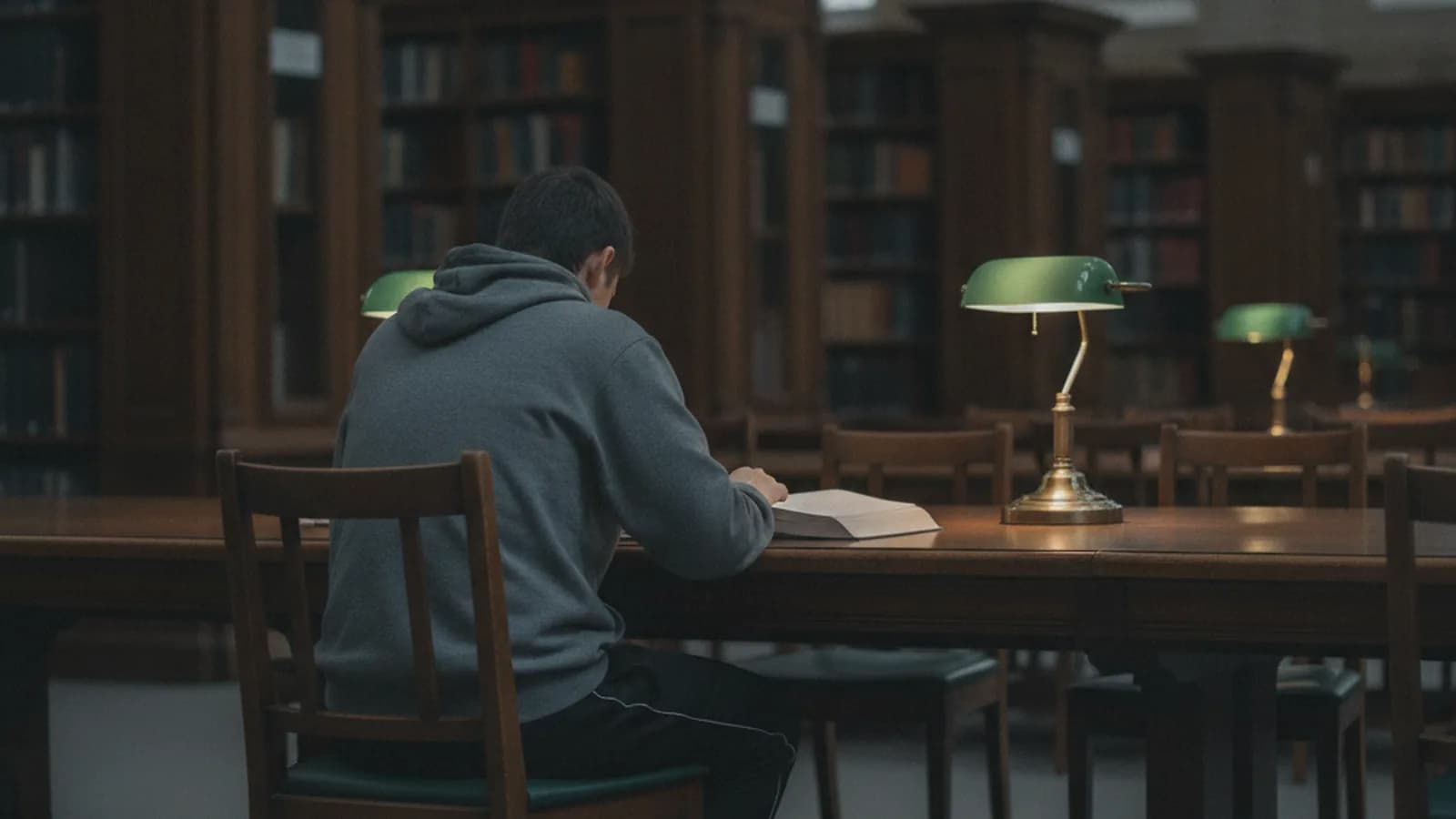
Image: AI-generated.
Studying next to sport in 3 key points
Classes in the morning, training in the afternoon
The athletic department plans your schedule so your classes fall in the morning. The team trains in the afternoon. Courses that run only in the afternoon are hard to fit in.
Supervised study hall in the evening
Study hall is study time under supervision, with a set number of hours. Staff record who attends. On most teams, study hall is a must in the first year. It becomes your regular study time during the season.
Exams in competition weeks
If an exam falls in a travel week, you have three choices. You take it earlier, later or under supervision on the road. The professor decides this. The coach does not. You have to ask weeks ahead.
The daily schedule in season
You lift weights before classes in season. Team training fills the afternoon, and treatment fits in between. Study hall runs in the evening, and it is study time under supervision.
Between two competitions, you have time to read a chapter. You don't have time to write a paper.
Write longer papers on free mornings outside competition weeks. If you wait for free time, you'll write them the week before the deadline.
You also have to plan your sleep. If you lift at a quarter to six, you can't stay up until two.
Reading time on away trips
An away trip means several bus hours and a night in a hotel. A day of competition follows. You can read on the bus, but a paper needs quiet and a library.
Plan your deadlines around the competition calendar. Put both calendars side by side in your first semester. A deadline and an away competition clash in three or four weeks a year.
Academic adviser, tutors and study hall
Your university or college gives its athletes their own academic adviser and subject tutors. It also runs a writing center and supervised study hall. It pays for this help because athletes without the required grades may not compete.
See your academic adviser before you choose courses. The adviser knows which classes fit a training plan. The adviser also knows which professors accept weeks of travel.
Transcripts and evaluation 18 months ahead
Two offices must be able to read your school records. Only then can a US university or college consider you. One is the admissions office, the other the NCAA Eligibility Center.
The NCAA is the largest US college sports association. Its Eligibility Center is the office that checks school grades and amateur status.
You need certified transcripts and an English test score. In some cases, you also need an official evaluation of your school diploma.
The admissions office and the Eligibility Center each set their own requirements and deadlines. Meeting one set does not mean you have met the other.
Start 18 months before you plan to enroll. Records from a school you left two years ago take longer than you expect. A certified translation takes weeks.
Degrees that clash with the training calendar
Some degrees clash with the competition calendar. Examples are lab sciences, engineering with afternoon labs and nursing with clinical training. Degrees with a required year abroad clash too.
You can still study them, but plan the schedule first.
Ask each coach whether an athlete on the team has taken this degree. Ask how that athlete managed the schedule. A coach who has had an engineer on the team can answer in detail.
Most US universities and colleges start with a year of general courses. You choose your major, your main subject, after that year. Use that first year to test it against the training plan.
Recognition of a US bachelor's degree at home
A US bachelor's degree takes four years. For a master's program, the university or college you apply to decides. For a job, the employer decides.
For a regulated profession such as medicine or teaching, a national authority decides. Ask that authority before you enroll. Don't wait until you graduate.
US universities and colleges differ a lot in academic name. The division says very little about that name. Divisions are the competitive levels of college sport.
Picture a Division III university or college with a strong academic name. Compare it with a Division I one with a weak name. The Division III one can give you the better degree.
Does the degree matter more to you than the sporting level? Tell the coaches early, because your list of universities and colleges changes.
Evening study hall under supervision is your only fixed study time in season.
Studying next to sport: rules and application steps
The NCAA sets the grades you need to compete. Its Eligibility Center checks them against your school transcripts and English test scores.
Rules with source and check date
Application steps with their dates
Common questions about athletic scholarships in the USA
How many daily study hours does a US college athlete have in season?
What grades does a US college athlete need to stay eligible to compete?
What happens if an exam falls on a college competition day?
Can I study engineering in the USA on an athletic scholarship?
Do US universities and colleges accept a European high school diploma?
What happens to my credits if I change US university or college?
More guides on athletic scholarships
Sources
Each figure comes from one of these sources. If no source reports a figure, we do not estimate one.
- NCAA, Initial-eligibility requirements (6 November 2026)
- NCAA, 2026-27 Division I Manual, Bylaws 14.3.1.1 and 14.3.1.1.1 (core courses, international exception) (6 November 2026)
- NCAA, 2026-27 Guide to International Academic Standards for Athletics Eligibility (11 November 2026)
- NCAA Eligibility Center, registration (6 November 2026)
- NCAA, 2026-27 Division II Manual, Bylaw 14.2.9 and Figures 14-3 to 14-5 (progress toward degree) (11 November 2026)
- NAIA, 2026-27 Official & Policy Handbook, Article V, Section C (12-hour, nine-hour, 24/36-hour and progress rules) (11 November 2026)
- NAIA, NAIA Approves Fifth Year of Eligibility (4 November 2026) (11 November 2026)
The editorial team of Athletic Scholarships USA writes and checks every text and figure. We are not an agency and do not place athletes at universities and colleges. When an agency would serve you better, we say so.