Updated on: 11 November 2026
Keeping your scholarship as a US college athlete
An injury cannot cost you NCAA athletic aid before the award ends. Failing grades, serious misconduct, quitting or a transfer notice can cost you the aid.
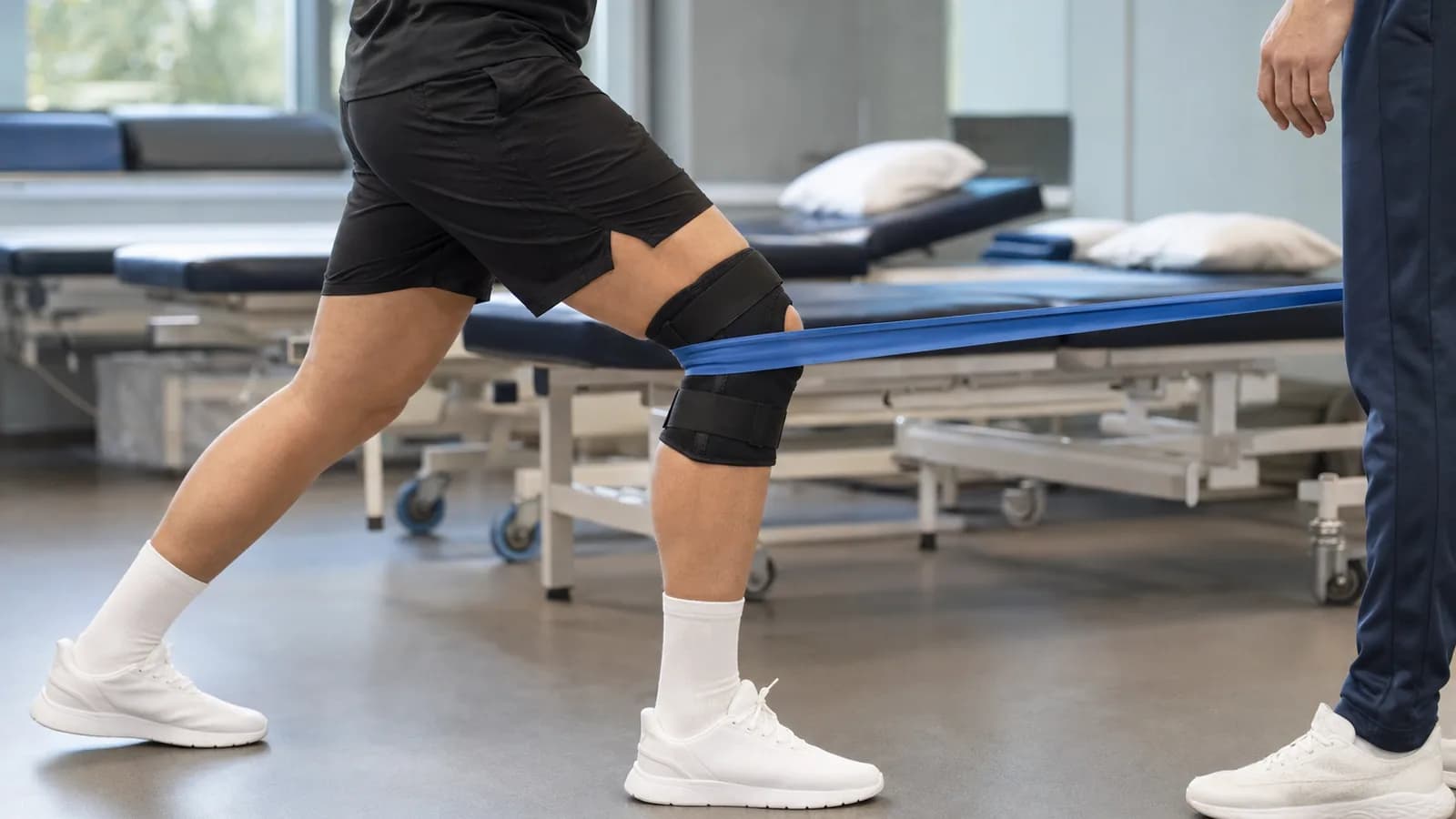
Image: AI-generated.
Keeping your scholarship in 3 key points
No cut for an injury during the award
The NCAA is the largest US college sports association. Division I and II are its two top levels. There, a university or college must keep your aid for the whole award period. This holds even after an injury or illness. The agreement may not tie the money to performance or playing time.
Your own actions can cost you aid
You can lose athletic aid when you lose your eligibility, your right to compete. Failing grades are one example. Serious misconduct, quitting the team and a written transfer notice are other reasons. The student disciplinary office judges misconduct, and the coach has no say in it.
A hearing outside the athletics department
An NCAA university or college may cut your aid or refuse to renew it. Then its financial aid office must offer you a hearing in writing. A committee outside the athletics department hears the case. The university or college may still reverse its decision later.
No cuts for athletic reasons during the award
An athletic scholarship runs for a fixed time, called the period of the award. Most awards last one academic year.
The NCAA is the largest US college sports association. Division I and II are its two top levels. During the award, these divisions ban cuts to athletic aid for athletic reasons.
Bylaw 15.3.4.2 covers Division I, and Bylaw 15.5.4.3 covers Division II. Both list three reasons a university or college may not use. They are performance, injury, illness of body or mind and any other athletic reason.
The amount may not fall after you sign the award letter. This holds for the whole period, even if your health keeps you from playing.
The award may not depend on a minimum number of starts or a position. The coach decides on playing time. So the rules put this risk on the university or college.
Renewal guarantee in Division I since August 2024
Division I has had one common renewal guarantee since August 1, 2024. It applies if you got athletic aid in your first full-time year there. That aid may not shrink or stop for athletic reasons while you can compete.
Bylaw 15.3.4.3 sets this guarantee. It covers performance, injury or illness and any other athletic reason.
Bylaw 15.3.6.1 sets a deadline of July 1. By then, the financial aid office must state in writing if it renews.
The guarantee depends on aid in your first year at the university or college. A walk-on is a team member without aid.
Say you start as a walk-on and earn aid later. Then the ban on cuts during the award still protects you. The renewal guarantee does not protect you.
Multi-year awards in Division I
Division I also allows awards that run for more than one academic year. They can last until your five years of eligibility, your right to compete, end.
A university or college may renew a multi-year award for fewer years than agreed. It may also renew it for a lower average amount. Division I counts both as a cut. You can then ask for a hearing.
Roster places and injuries in Division I
Since July 1, 2025, Division I limits team size instead of scholarships. Say an athlete on aid loses a roster place for performance, injury or planning. The NCAA says this athlete keeps the scholarship until choosing to transfer.
An injury may end any chance of playing again. Then the athlete may drop off the roster count from the next roster year. It can still give that athlete benefits.
The university or college must also pay to treat an injury from your sport. This lasts for at least two years after you graduate or leave.
Yearly renewal of awards in Division II
Division II is the second level of the NCAA. There, an award of athletic aid runs for one full academic year. Shorter awards exist only in a few named cases. Examples are a start in the middle of the year or a final semester.
The university or college must decide each year whether it renews the award. It must tell you in writing by July 1. During the year, the ban on cuts for athletic reasons applies in full.
At year end, Division II rules allow a stop for athletic reasons. A coach may say the athletics department will recommend renewal for four years. The coach must then add that renewal is not automatic.
A university or college may also not promise aid after an injury. Ask for its written policy on injured athletes.
Athletic aid rules in the NAIA
The NAIA is a smaller second association with its own handbook. It controls athletic aid above all through limits.
The NAIA Handbook 2026-27 limits aid per student to five costs. These are tuition, required fees, books, housing and meals. It also caps the aid per team.
All athletic aid must go through the regular financial aid office. The NAIA sets no national rule on how long an award lasts. It also sets no rule on cuts or hearings.
The policy of your university or college and your written agreement decide these questions.
6 permitted reasons for cutting NCAA aid
The NCAA rule books for Division I and II name six reasons for cuts. The first is losing your eligibility, your right to compete, through your own action. Most often, this happens when you miss the yearly minimum of credits and grades.
The second reason is fraud, such as signing for a sport and skipping practice. The third reason is serious misconduct.
The student disciplinary office judges misconduct instead of the coach. The fourth reason is your own decision to leave the sport.
The fifth reason is a non-sport condition in the agreement. Examples are academic standards or written team rules.
The sixth reason is a transfer notice. This notice puts you into the transfer portal. That is the NCAA database of athletes who want to transfer.
Athletic aid after a transfer notice
Say your Division I university or college gets your transfer notice during a term. It may not cut your aid before that term ends. If you give notice between two terms, the aid can end at once.
In Division II, the aid lasts until that academic year ends. The university or college may then cancel your signed agreement for the next year.
Coach changes and transfer windows in Division I
A change of head coach is no reason to cut athletic aid. A new coach cannot cut your aid while the award runs. In Division I, the coach also cannot refuse renewal for athletic reasons.
A head coach may leave or announce leaving. Division I then opens a 30-day transfer window, starting the next day. Basketball and ice hockey have their own shorter windows.
Bylaw 13.1.1.4.1.1.2 adds a second Division I transfer window from January 2026. This window also lasts 30 days.
The second window covers athletes who got aid only after their first year. The window opens if a cut or a refusal to renew ends this aid.
Walk-ons who earned aid later can use this window. It does not open after a cut for one of the six permitted reasons.
Hearing after a cut of NCAA aid
An NCAA university or college may cut your aid or refuse to renew it. Then its financial aid office must offer you a hearing in writing. The notice names the procedure and your deadline.
In Division I, the hearing chance must come before any cut during the award. Neither the athletics department nor its faculty athletics committee may run the hearing.
Division II examples are a financial aid committee or the dean of students' office. It wants the notice within 14 days of the decision. The hearing must take place within 30 days of your request.
Bring the award letter and the written reason for the decision to the hearing. After an injury, also bring your medical records.
Both divisions let a university or college reverse a decision not to renew. So a decision in June need not be final.
Contents of the written athletic aid offer
Both NCAA divisions want a written statement of the award. It names the amount, the duration, the conditions and the terms of the award.
The chair of the general aid committee or a deputy must sign it. A signature from the athletics director alone does not count.
Check the duration first. One year and four years are different offers, even at the same amount. Conditions may cover academics, conduct and team rules.
In the NCAA, conditions may never cover performance or playing time. Check whether you get a fixed amount or a share of a changing cost.
Then read the policy on renewal and injuries. In Division II and the NAIA, this policy outweighs anything a coach says.
In the NAIA, ask the financial aid office about three cases. These are an injury, a coach change and a failed term. Get the answer in writing.
Athletic aid and the F-1 visa
On an F-1 student visa, you carry a risk that US teammates do not. Form I-20 is the admission document you need for the visa. To get it, you must show that you can pay the full first-year cost.
In most cases, your athletic award is much of your proof of funds. If the award falls, you must cover the gap. You can use family money, other scholarships or a loan.
The DSO is the official for international student records at your university or college. When your funding changes, the DSO updates your SEVIS record.
SEVIS is the US government's record of your student status. The DSO also issues a new Form I-20.
Tell the international student office before the next term's bill arrives.
Reduced course load after an injury
F-1 status needs full-time study. For undergraduates, that means at least 12 credits per term. With medical documents, the DSO can approve a reduced course load. It lasts at most 12 months per level of study.
The DSO must approve the reduced load before you drop a course. A move to another university or college also needs a SEVIS transfer. The two international offices handle it. You need this on top of the NCAA transfer notice.
For your own status, ask the international student office of your university or college. For a legal question, ask an immigration lawyer.
Athletic aid cuts by reason and association
Each row names one reason. The cells show if the association allows an aid cut for this reason. The rules are as of November 2026.
| Reason | NCAA Division I | NCAA Division II | NAIA |
|---|---|---|---|
| Injury or illness | No cut during the award year. No refusal to renew if you had aid from your first year on | No cut during the award year. The university or college may refuse to renew at year end | No national rule. Your university or college and your agreement decide |
| Athletic performance | No cut during the award year. No refusal to renew if you had aid from your first year on | No cut during the award year. The university or college may refuse to renew at year end | No national rule. Your university or college and your agreement decide |
| Head coach change | Not a reason. A transfer window opens | Not a reason during the award. Renewal comes up each year | No national rule. Your university or college and your agreement decide |
| Losing a roster place | Aid stays unless you choose to transfer | No 2025 roster limits. Renewal comes up each year | No roster limits. Your university or college decides |
| Failing grades and ineligibility | Permitted | Permitted | Your university or college decides |
| Serious misconduct | Permitted. The student disciplinary office decides | Permitted. The student disciplinary office decides | Your university or college decides |
| Quitting the team | Permitted | Permitted | Your university or college decides |
| Written notice of transfer | Permitted from the end of that term | Permitted from the end of that academic year | Your university or college decides |
| Length of award | One year up to the full five-year period | One full academic year | Your university or college sets it |
| Hearing | Required, outside the athletics department | Required. Notice within 14 days, hearing within 30 days | No national rule |
An NCAA award protects your athletic aid from cuts for injury, illness or performance.
Keeping your scholarship: rules and application steps
The NCAA funding rules decide how an award runs and renews. The transfer rules decide its fate when you move to another university or college.
Rules with source and check date
Application steps with their dates
Common questions about athletic scholarships in the USA
Can a US university or college cancel my athletic scholarship after an injury?
Can a new head coach take away my athletic scholarship?
Does an athletic scholarship end when I enter the transfer portal?
Can a US university or college cut an athletic scholarship because of bad grades?
How long does an athletic scholarship last in Division II?
What happens to my F-1 status after a cut to my athletic scholarship?
More guides on athletic scholarships
Sources
Each figure comes from one of these sources. If no source reports a figure, we do not estimate one.
- NCAA Division I Manual 2026-27, Bylaws 13.1.1.4 (including 13.1.1.4.1.1.2), 15.3 (including 15.3.6.1) and 17.2 (11 November 2026)
- NCAA Division II Manual 2026-27, Bylaw 15.5 (including 15.5.5.1) (11 November 2026)
- NCAA, DI Board of Directors increases benefits for college athletes (26 April 2023) (11 November 2026)
- NCAA, Division I Student-Athlete Core Guarantees (3 November 2026)
- NCAA, Division I Student-Athlete Benefits and Expenses (3 November 2026)
- NCAA, DI Board of Directors formally adopts changes to roster limits (3 November 2026)
- NAIA Handbook 2026-2027, Bylaws Article II Section B and Institutional Financial Aid Policy (3 November 2026)
- Study in the States, SEVIS Help Hub, Financial Information (3 November 2026)
- U.S. Department of Education, Equity in Athletics Data Analysis (20 August 2026)
- College Board, Trends in College Pricing and Student Aid 2025 (20 August 2026)
- NCAA, Question and Answer: Implementation of the House Settlement (updated 29 May 2026), questions A13 and A14 (Alston awards) (11 November 2026)
- NCAA, Division I Council approves changes to transfer rules (April 2024) (3 November 2026)
- AP, Schools are snatching up transfers in college hoops. That means fewer freshmen on D-I rosters, too (NCAA data, 2 November 2023) (11 November 2026)
- NCAA, Division I and Division II age-based eligibility rules (11 November 2026)
- NAIA, NAIA Approves Fifth Year of Eligibility (11 November 2026)
The editorial team of Athletic Scholarships USA writes and checks every text and figure. We are not an agency and do not place athletes at universities and colleges. When an agency would serve you better, we say so.